Ciste na Séadchomharthaí Pobail
Bhunaigh an Roinn Tithíochta, Rialtais Áitiúil agus Oidhreachta Ciste na Séadchomharthaí Pobail den chéad uair Iúil, 2020, nuair a fógraíodh leithdháileadh €1.4 milliún do chaiteachas ar fheabhsúcháin ar shéadchomharthaí seandálaíochta. Mhéadaigh an maoiniú go €7.5 mhilliún in 2026.
Is iad príomhaidhmeanna Chiste na Séadchomharthaí Pobail séadchomharthaí áitiúla agus láithreáin stairiúla a chaomhnú, a chothabháil, a chosaint agus a chur chun cinn. Tá roinnt sruthanna maoinithe aige atá dírithe ar oibreacha caomhnaithe a chumasú ar shéadchomharthaí a mheastar a bheith suntasach agus a bhfuil tacaíocht phráinneach de dhíth orthu, rochtain ar shéadchomharthaí a spreagadh agus a gcur i láthair a fheabhsú agus athléimneacht a thógáil i séadchomharthaí chun cur ar a gcumas éifeachtaí an athraithe aeráide a sheasamh.
Infheistíonn Ciste na Séadchomharthaí Pobail caipiteal riachtanach inár n-oidhreacht luachmhar seandálaíochta agus cabhraíonn sé le húinéirí agus caomhnóirí séadchomharthaí seandálaíochta iad a chosaint amach anseo ar mhaithe le pobail agus leis an bpobal. Tá an ciste á riar ag Oifig Oidhreachta Fhine Gall do Sheirbhís na Séadchomharthaí Náisiúnta, an Roinn Tithíochta, Rialtais Áitiúil agus Oidhreachta.
Ciste na Séadchomharthaí Pobail 2026
Éascóidh an Ciste 2026 an méid seo a leanas:
- cumasóidh sé oibreacha caomhantais a chur i gcrích ar shéadchomharthaí a mheastar atá suntasach agus a dteastaíonn tacaíocht uathu ar bhonn práinne;
- cothóidh sé seasmhacht ár séadchomharthaí chun cur ar a gcumas déileáil le héifeachtaí an athraithe aeráide.
- spreagfaidh sé rochtain ar shéadchomharthaí agus feabhsóidh sé an chuma atá orthu;
Tá na 3 shruth a leanas ag Chiste na Séadchomharthaí Pobail
- Cuirfidh Sruth 1 deontais suas le €100,000 ar fáil atá dírithe ar dheisiúcháin riachtanacha agus oibreacha caipitil chun séadchomharthaí seandálaíochta a chaomhnú agus a dheisiú.
- Cuirfidh Sruth 2 deontais suas le €30,000 ar fáil chun Pleananna/Tuarascálacha Bainistíochta Caomhantais atá dírithe ar bhearta a aithint chun séadchomharthaí seandálaíochta a chaomhnú agus feabhas a chur ar rochtain phoiblí.
- Cuirfidh Sruth 3 deontais suas le €30,000 ar fáil chun bonneagar rochtana agus léirmhíniú (lena n-áirítear fíorúil/ar líne) a fheabhsú ag séadchomharthaí seandálaíochta.
Tá sonraí iomlána Chiste na Séadchomharthaí Pobail 2026 ar fáil sa Lámhleabhar:
Lámhleabhar Chiste na Séadchomharthaí Pobail 2026
Tá Foirm Iarratais Chiste na Séadchomharthaí Pobail 2026 ar fáil thíos:
Foirm Iarratais Chiste na Séadchomharthaí Pobail 2026
Is é 4pm Dé hAoine an 30 Eanáir 2026 an dáta deiridh le haghaidh iarratais a fháil
Chun tionscadail fhéideartha a phlé, déan teagmháil le hOifigeach Oidhreachta Fhine Gall ag
[email protected]
Full details of the the Community Monuments Fund 2026 are available in the Handbook:
The Comunity Monuments Fund 2026 Application Form is availabe below:
Closing date for receipt of applications is 4pm Friday 30th January 2026
To discuss potential projects please contact Fingal Heritage Officer at span>[email protected]
Community Monuments Fund Grant in 2024
St Columba’s Towers Swords (€120,000)
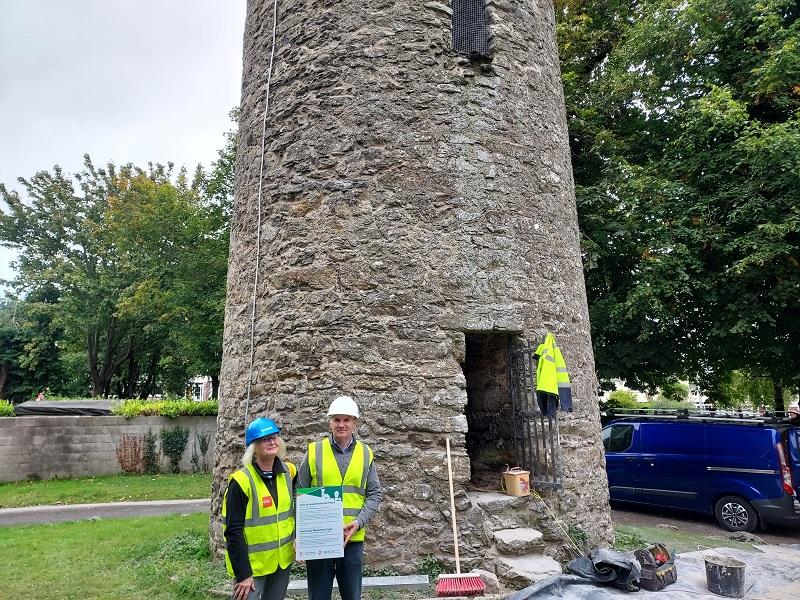
Phase 3 of conservation works concentrated on the medieval square tower (DU011-034004) and the interior of the round tower (DU011-034005) of St Columba’s, Swords. The scope of works had been identified in 2021 and phases of conservation works undertaken in 2022 & 2023, thanks to CMF funded surveys and Conservation Management Report. The round tower is a six-storey masonry structure above a sub-floor 1.40m below the entrance level, circular in plan and tapering significantly as it rises. The interior of the round tower had suffered severe mortar loss over the entire inner surface from above the level of the corbels to the bell-floor level. Which was addressed. The roof of the belfry tower was re-slated, a new parapet gutter was formed with integral rainwater outlets new timber floors were inserted. See Phase 3 Archaeological report. Team: Revamp Construction Ltd., Trim Archaeological Projects, DKP Conservation Engineers and Margaret Quinlan Architects.
Balrothery Tower House (€110,904.75)
Balrothery Castle (DU005-057006) is a three-storey rectangular tower house with later modifications. Phase 2 of works comprised the conservation and repair of the north and west masonry walls to secure the historic fabric including control of vegetation, repointing and crack stitching. The first floor above the vault was covered in weeds, soil and other detritus. In order to ensure that water seepage through the vault to the room below was excluded, or at least minimised, the material was removed down to the surviving mortar and exposed stones by trowelling back the accumulated humus and other material. Loose stone, Styrofoam, loose mortar and various modern finds (an early electric iron, part of a piston, shotgun cartridges, and old batteries) were noted. See Phase 2 Archaeological report. Team: Revamp Construction Ltd., Trim Archaeological Projects, DKP Conservation Engineers and Margaret Quinlan Architects.
Lanistown Castle (€120,000)
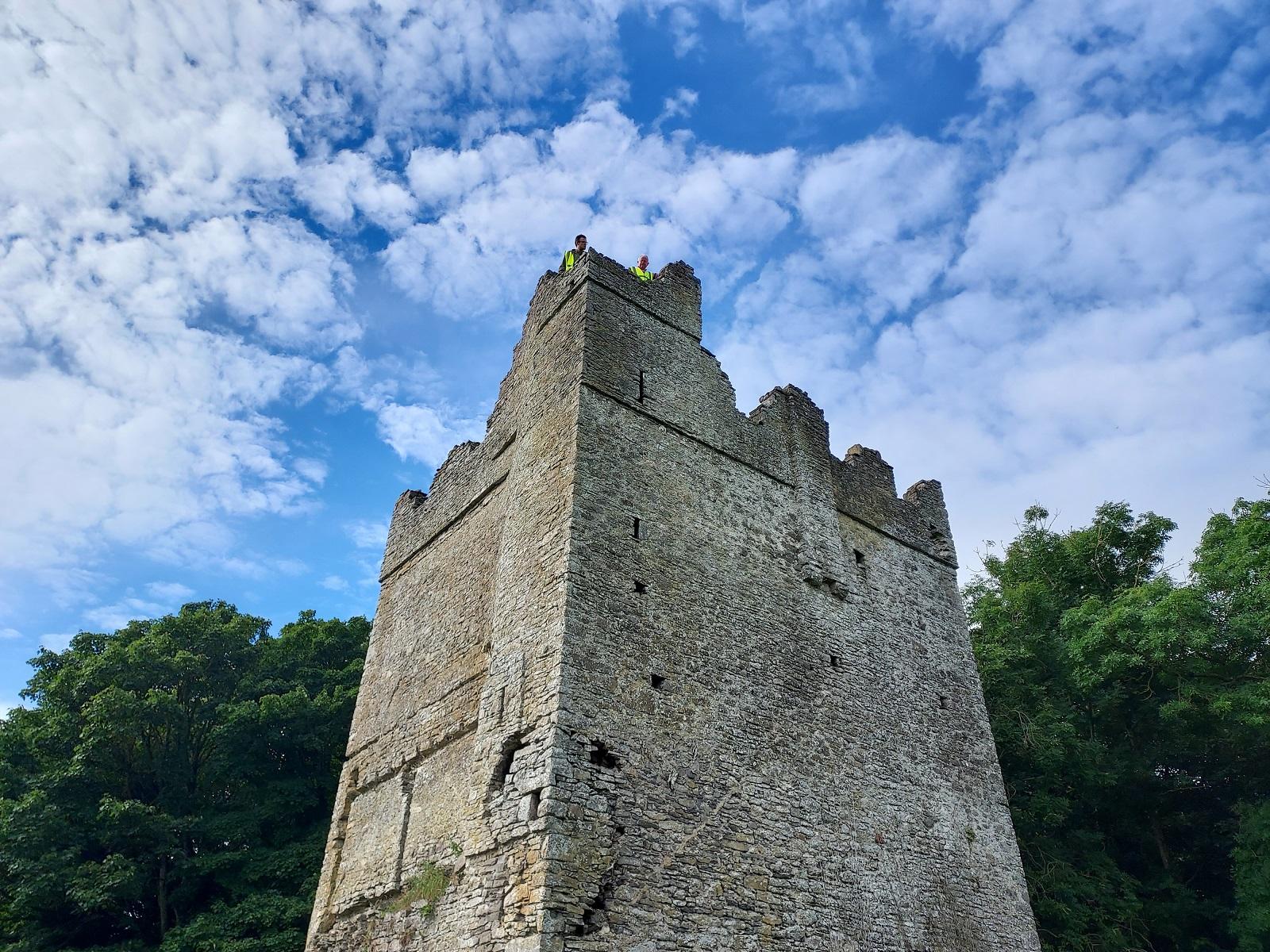
Works to Lanistown Castle (DU012-004) consisted of essential masonry and mortar repairs to address structural failure, loss of mortar and masonry, water ingress; and to arrest and retard the damage arising from weather exposure generally and the accelerated effect of climate change. Detailed ecological studies have been undertaken and measures to encourage owl and bat use of the castle have been incorporated into the works programme. See Archaeological report. Team: Francis Haughey Ltd.; IAC Ltd. DKP Conservation Engineers; Scott Cawley Ltd. and Fingal County Council Conservation Architects.
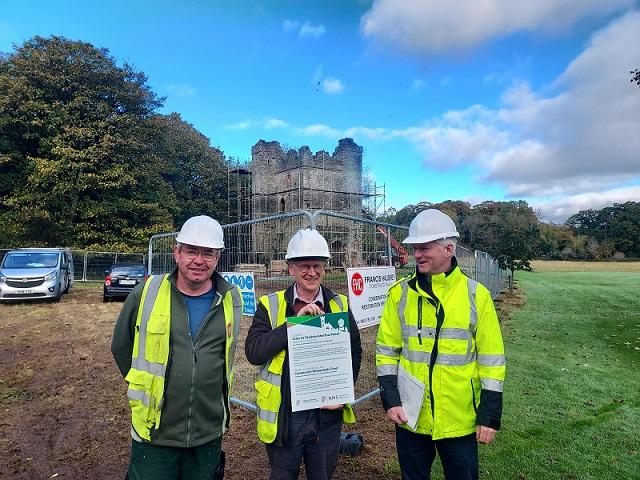
St Doulagh’s Conservation Management Plan (€29,950)
St Doulagh’s ecclesiastical complex is focussed on St Doulagh’s Church, a rectangular multi-period building that is still used as a place of worship. The ecclesiastical complex includes a medieval stone cross, St Catherine’s Well, and St Doulagh’s Well, in addition to the ecclesiastical enclosure, the graveyard, medieval architectural fragments, and a field system. The cross disciplinary team provide a framework that enables the conservation and preservation the archaeological, architectural, cultural, and natural heritage of the church, graveyard, holy wells and associated monuments in the ecclesiastical complex, as well as the necessary guidance to appropriately address issues around the site’s conservation, access and interpretation. See Conservation Management report Team: Archaeological Management solutions Ltd; Flynn Furney Environmental Consultants; Goodwin Arborists; Centre for GISD and Geomatics, Queens University Belfast and Southgate Associates.
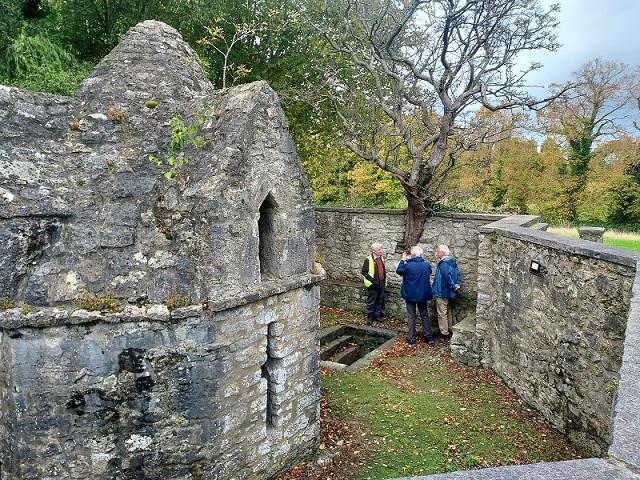
St Fintan’s Conservation Management Plan (€24,784.50)
The Conservation Management Plan for St Fintan’s church, County Dublin, provides a narrative of the archaeological significance of the fragmented remains of several recorded monuments and places, including a church known as St Fintan’s (DU015-031002; RPS 575), a graveyard (DU015-031003), a cross (DU015-031004) and an ecclesiastical enclosure (DU015-031001), while setting out recommendations for the management of the built heritage of St Fintan’s church. The site where St Fintan’s church and graveyard are situated may date back to the early medieval period; while the church structure is believed to be Early-Norman in date, with later medieval alterations. The associated graveyard is roughly rectangular in shape, however there is a curve in the boundary along its western edge, indicating an early ecclesiastical enclosure (6th/7th century). The oldest section of the graveyard dates to 1189, and it continued to be in use into the mid-20th century (1954), as evidenced by the presence of headstones of this date within the site. See conservation management report Team: IAC Ltd,; David Maher Conservation Engineer; Jo Leigh Geophysical Surveys and Fingal County Council Conservation Architects.
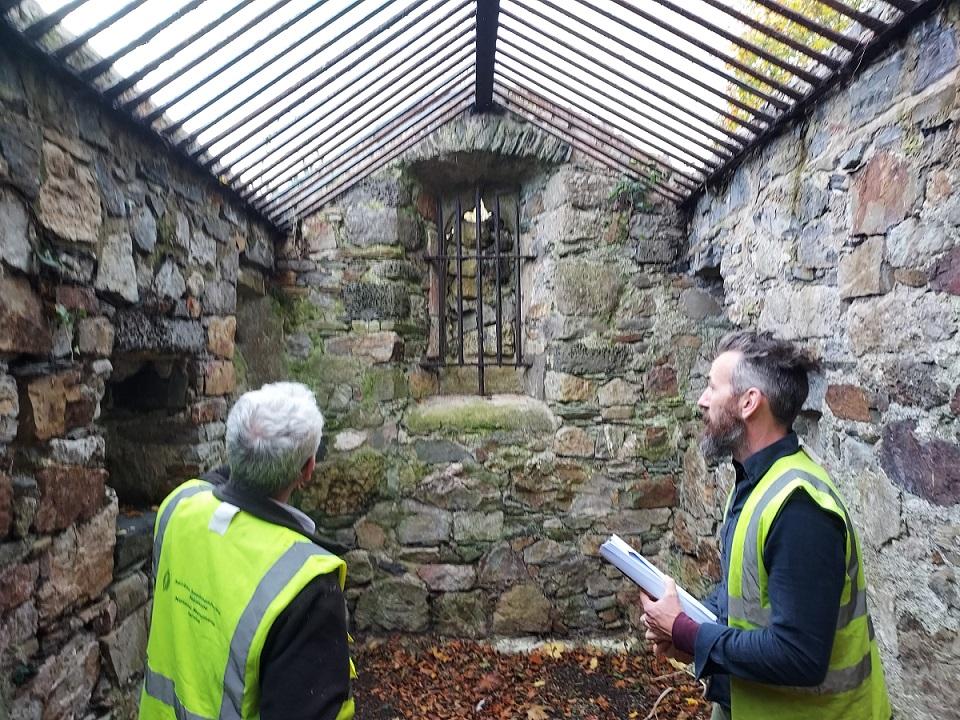
St Columba’s Towers Swords (€120,000)
Conservation works concentrated on the round tower (DU011-034005) and medieval square tower (DU011-034004) of St Columba’s, Swords. The scope of works had been identified in 2021 and the first phase of conservation works undertaken in 2022, thanks to CMF funded surveys and Conservation Management Report. Archaeological excavation was undertaken within the round tower to try and ascertain the foundation levels and bedrock. Ash deposits, some mixed with soil, from the base of the interior of the tower were removed and what appears to be original flooring in the tower was partially excavated. Very few round towers have had modern excavations occur in or beside them. See Archaeological report. Team: Revamp Construction Ltd., Trim Archaeological Projects, DKP Conservation Engineers and Margaret Quinlan Architects.
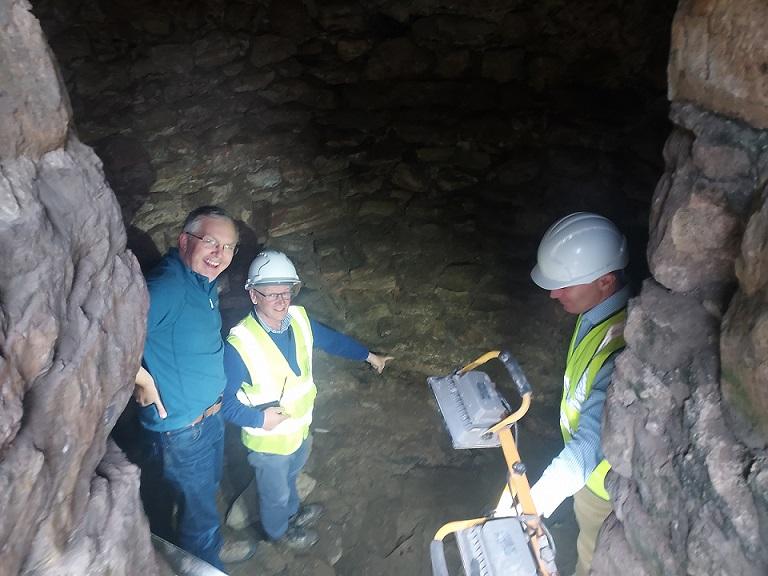
Balrothery Tower House (€113,971.38)
Balrothery tower house is located south of a laneway which runs E/W along the south side of the church and also forms part of the townland boundary between Balrothery and Glebe South. It is one of just fifteen extant tower houses that survive in Fingal. Balrothery Castle (DU005-057006) is a three-storey rectangular tower house with later modifications. The works comprised the conservation and repair of the east and south masonry walls to secure the historic fabric including control of vegetation, repointing and crack stitching. A low-pitch stone slab roof with recessed drainage was uncovered over the caphouse when the vegetation and a deep layer of humus was removed while a blocked-up loop was revealed beside the second-floor window in the south wall (on the east side of the window). A roof abutment scar was revealed at the south east corner at parapet level. See Archaeological report. Team: Revamp Construction Ltd., Trim Archaeological Projects, DKP Conservation Engineers and Margaret Quinlan Architects.
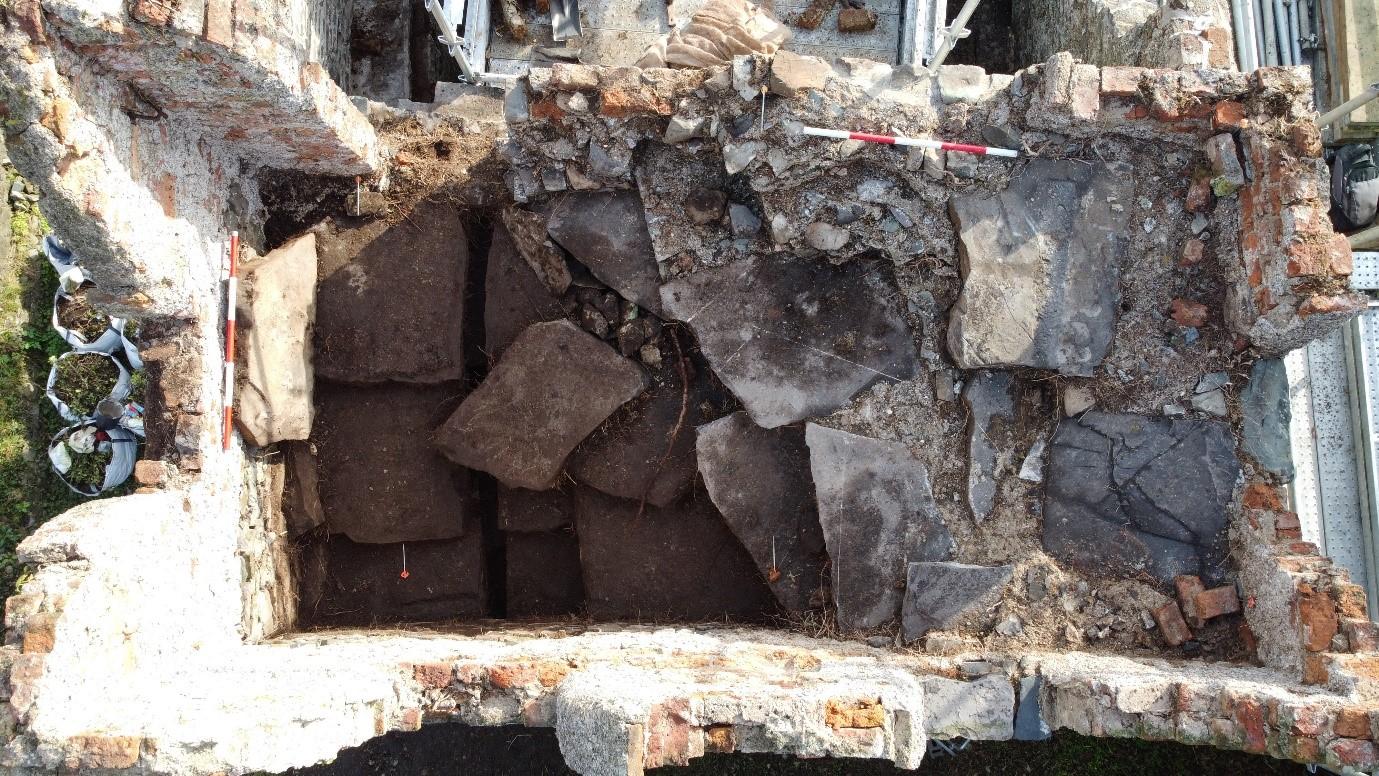
St Mary’s Clonmethan, Oldtown (€120,000)
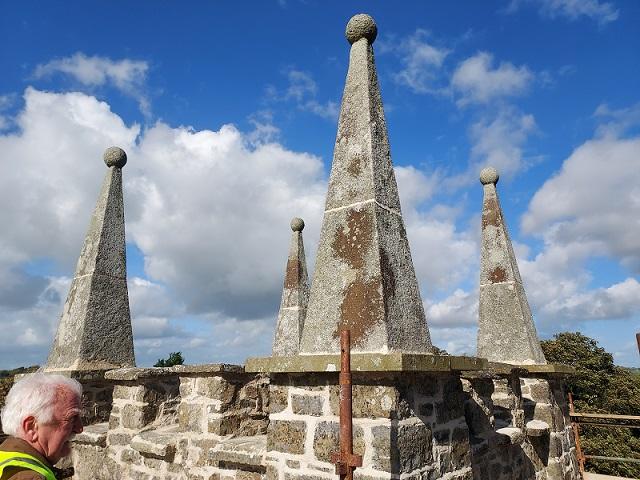
Conservation works concentrated on St Mary’s Church, Clonmethan, Oldtown. The scope of works had been identified in 2022 CMF funded Conservation Management Plan. The key focus of the 2023 programme of conservation works was the bell tower of the church. Vegetation was removed from the structure and the stonework was repointed with like-for-like mortars. The crenellations, cappings, pinnacles and loose masonry were bedded and reset and the modern blocks in the entrances to the bell tower and vestry were removed. A set of steel gates were fabricated and fitted in the two entrances, while the decayed lintels in the vestry were replaced. Team: Led by Dr Kim Rice of AMS Ltd. Dermot Nolan of Sheridan Woods Nolan Architects & Urban Planners, Eamon Doyle & Associated Consulting Engineers, Kas Build and the Friends of Clonmethan. See Archaeological report
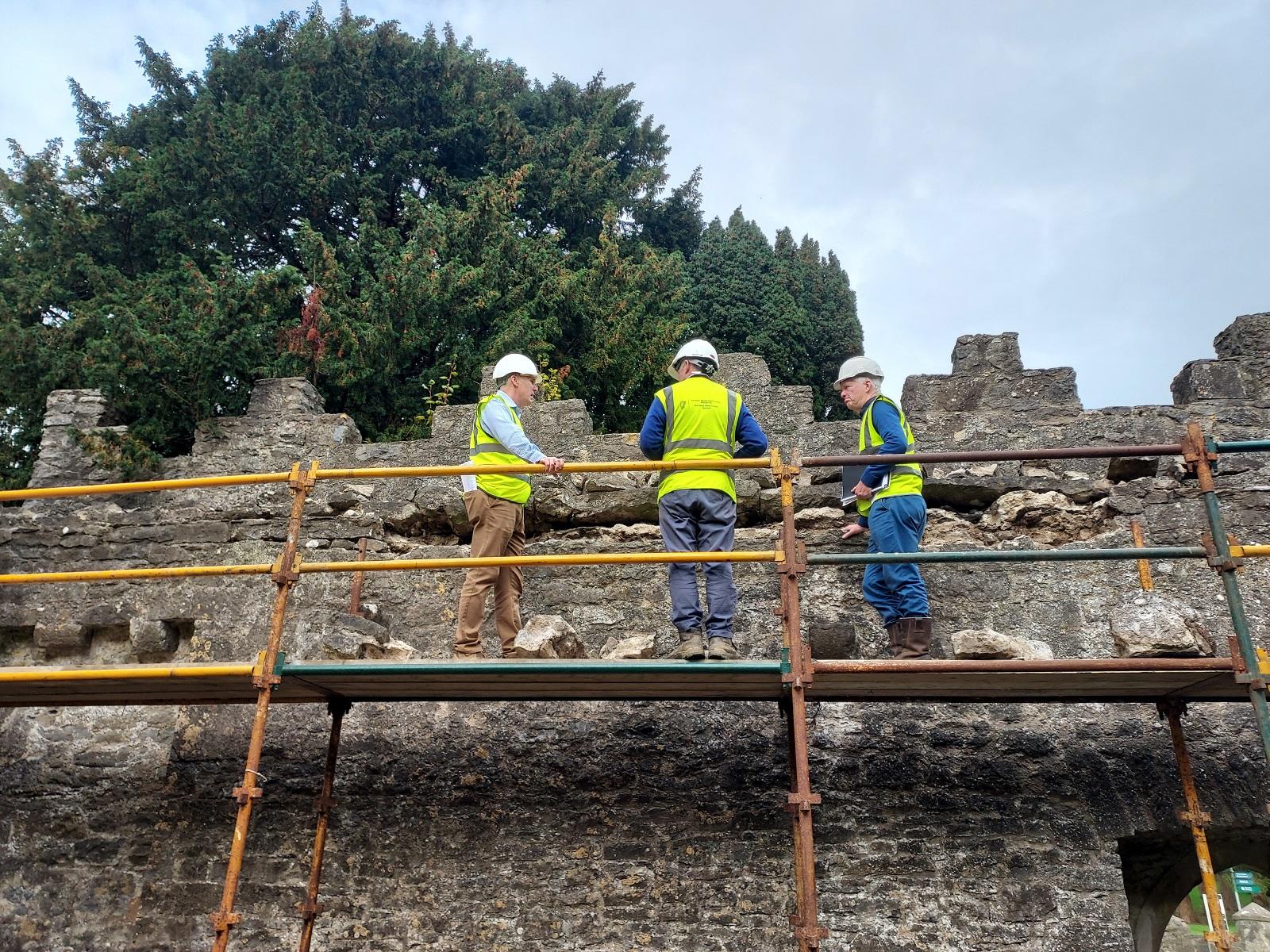
Malahide Church & Graveyard (€120,000)
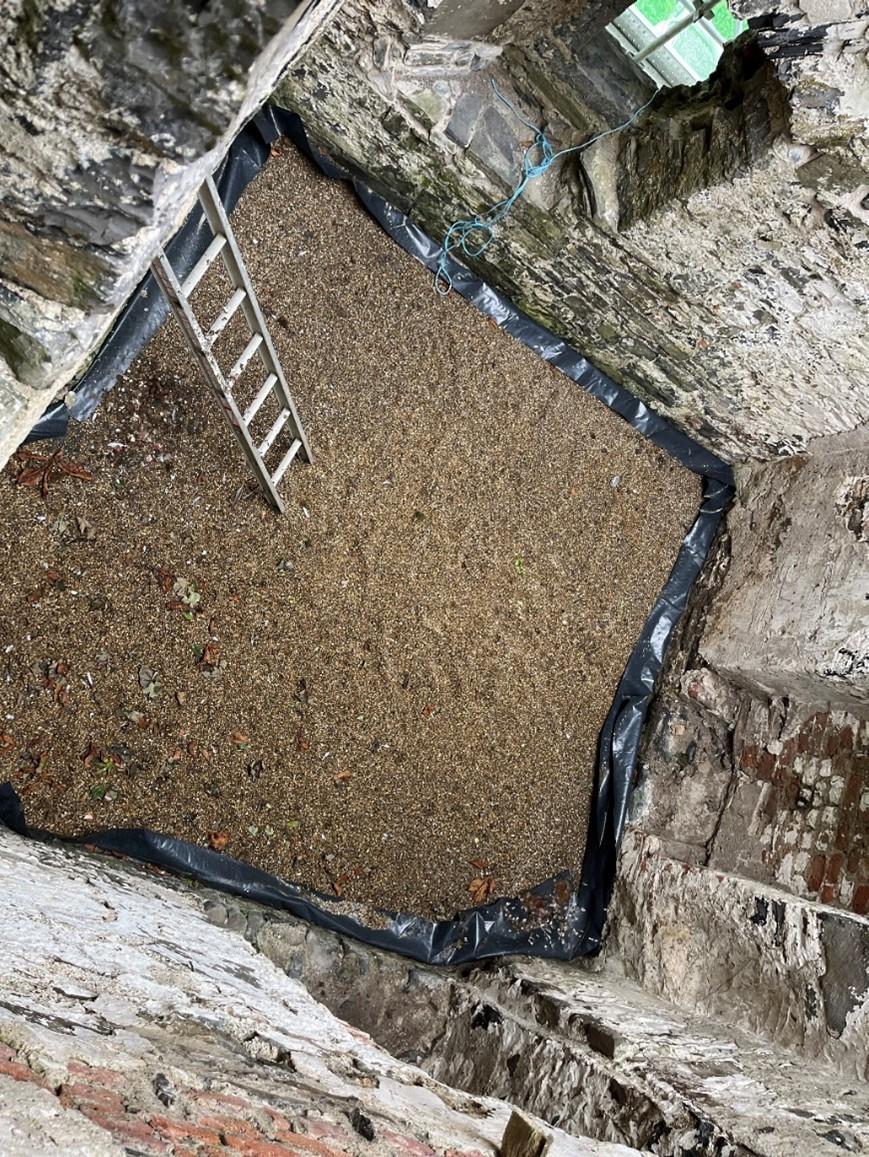
Conservation works concentrated on the church (DU012-031001) and graveyard (DU012-031006) within Malahide Demesne. These included removal of embedded ivy stems in the wall top of the church; Re-setting of grave slabs within the church; Dismantling and re-assembly of a distorted chest tomb; Re-attachment of corner fragment of chest tomb cover; Repair of wall capping to boundary wall; Removal of vegetation from the bellcote; Stitching of stone window mullion; Laying a gravel surface to the interior of the church. What appears to be the remains (two adjoining walls, reduced in height) of a building were revealed in the southwest corner of the graveyard. A print showing the church has come to light which includes a building with a corbelled eaves at this location. The print is undated, but the title suggests sometime between 1791 and 1830. A well-received training day for Council staff was held on site on 19th October. This will enable running maintenance/ smaller repairs to be done in-house and is transferable to estate wall repairs. Team: John Kelly DKP Conservation Engineers , Brian O’Connor, FCC Architects, Archer Heritage Ltd, Francis Haughey Ltd. See Archaeological report
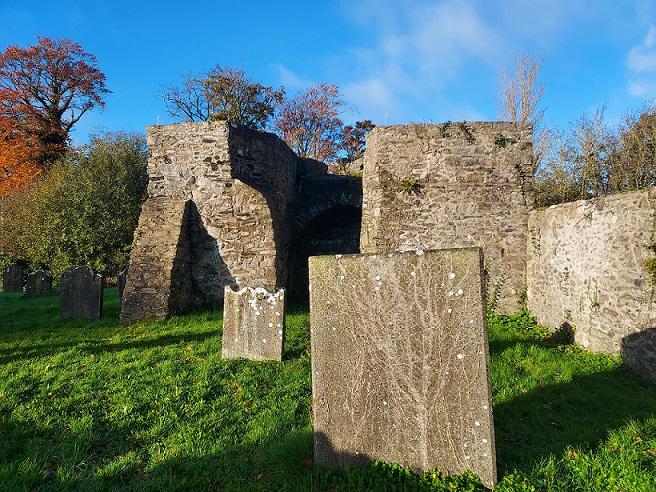
Mulhuddart Church Conservation Management Plan (€24,267.90)
The Conservation Management Plan (CMP) for Mulhuddart Church (St. Mary’s) (DU013-01001) and graveyard (DU013-01003) has been prepared by a multidisciplinary project team and aims to place the church in its archaeological and historical contexts, in order to assess its significance and define and address any potential management issues. The Conservation Management Plan (CMP) is intended to inform any future conservation works at the site. Team: Archaeology & Built Heritage Ltd.; CORA Consultant Engineers; Archer Heritage Ltd. See Archaeological report
St Marnock’s Church, Portmarnock (€85,000 )
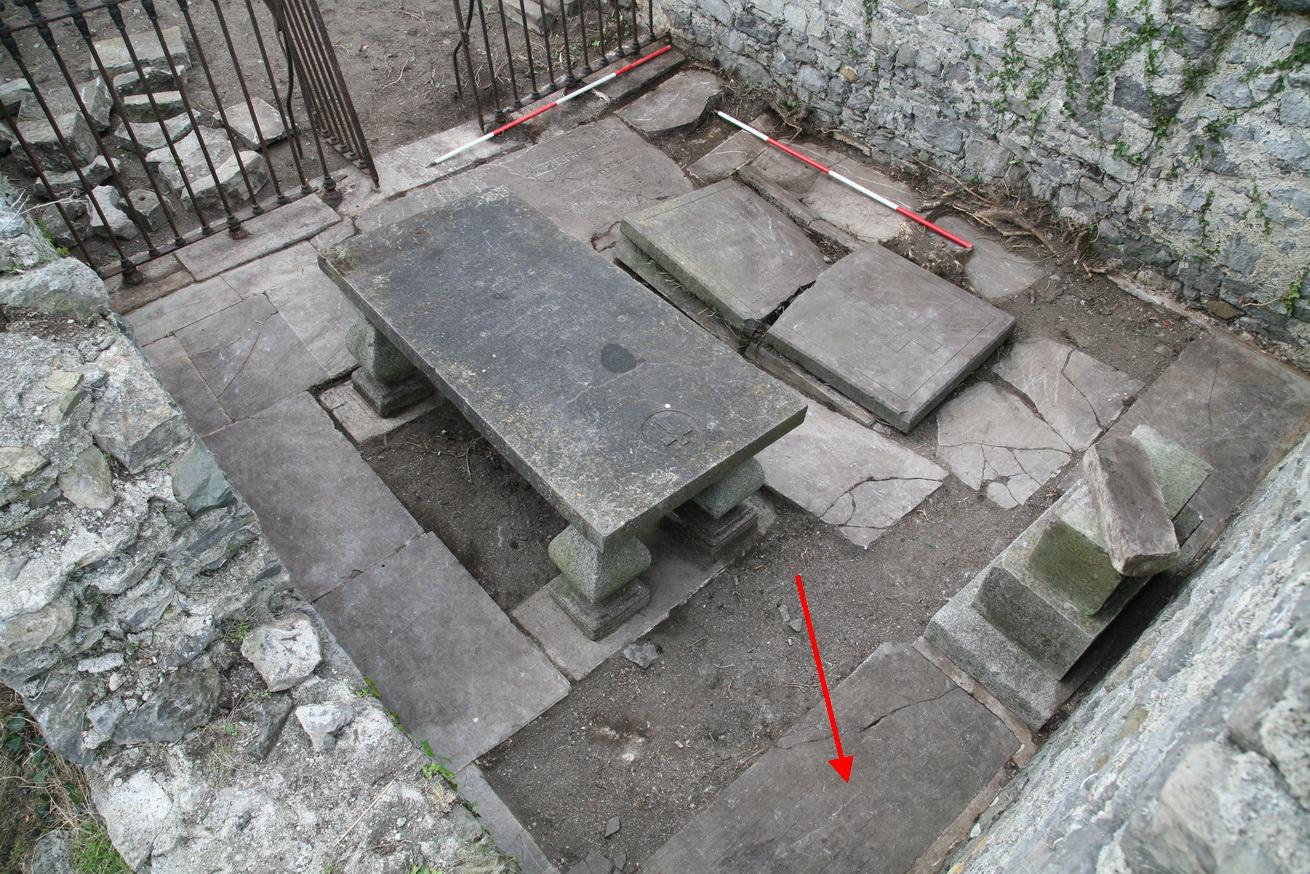
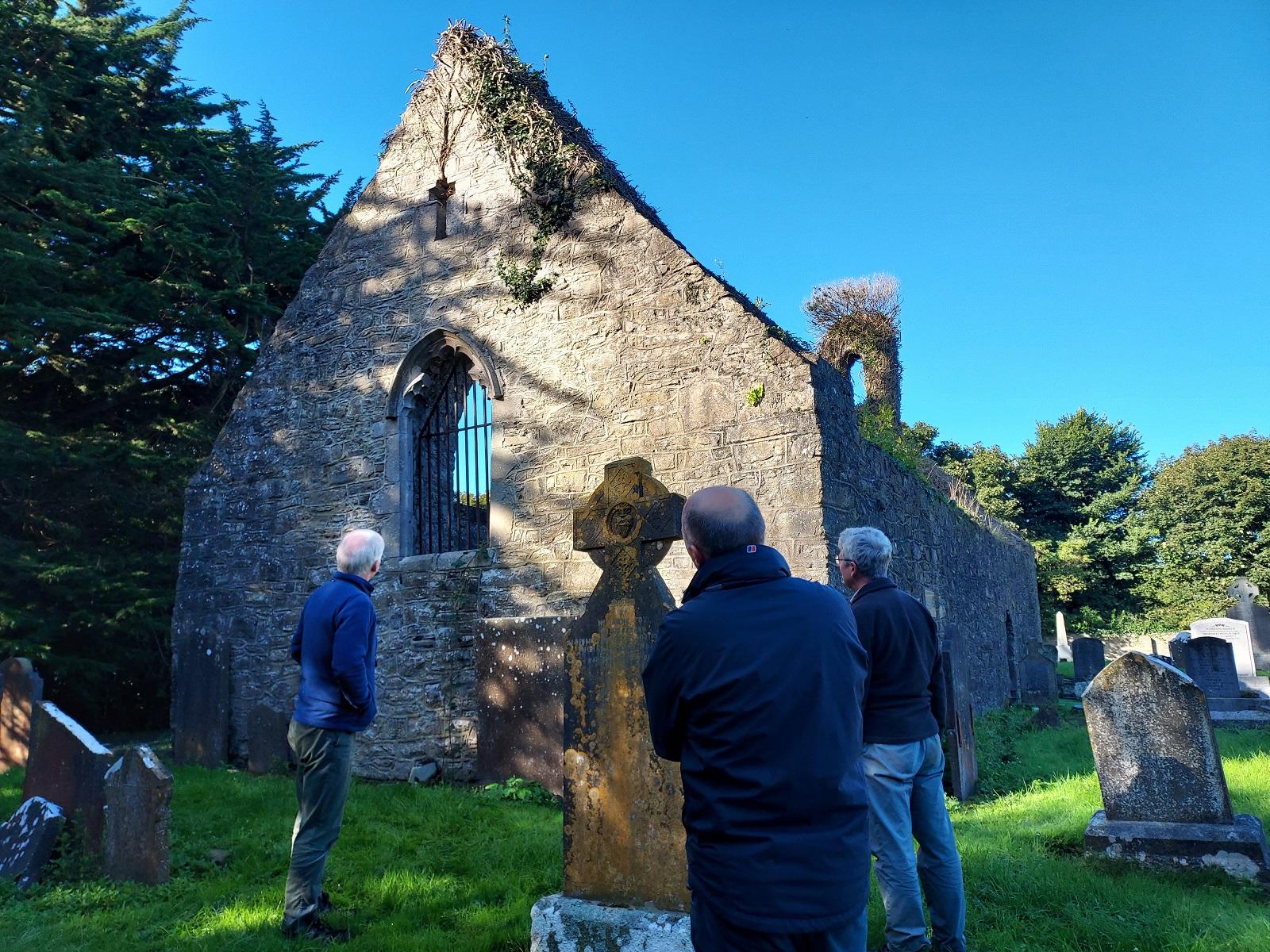
The medieval church (DU015-007001-) has been in ruins since at least the middle of the seventeenth century and where the bellcote at the western end survived into the age of photography, the east wall survives today only just to the apex of the gable. The site was initially surveyed under CMF 2020, and a set of recommendations was designed to arrest the structure’s further decline and to preserve it into the future. Essential masonry repairs to the medieval church monument including removal of embedded roots, re-pointing, consolidation of unstable stonework, structural stitching, to protect against/ retard the effects of masonry decay on the remains as a result of exposure to weather.
Removal of vegetation uncovered a limestone memorial dedicated to Teresa Plunkett who died in 1672. It would appear it was placed in its present position in 1862 when a table tomb was erected for John William Plunkett. Teresa was the third daughter of William Plunket (d. 1662), whose father Luke (d. 1636) was granted the 'castle, town, lands and hereditaments' of Portmarnock the year before he died (Myles 2022-Archaeological report St. Marnock’s Church). Oliver Hearty & Sons Ltd. undertook the works overseen by Archaeology & Built Heritage Ltd. , DKP Conservation Engineers and Brian O’Connor Fingal County Council Architect.
Photo: St Marnock’s Chancel general view. Courtesy of Archaeology & Built Heritage Ltd.
St Catherine’s Church, Kenure (€85,000)
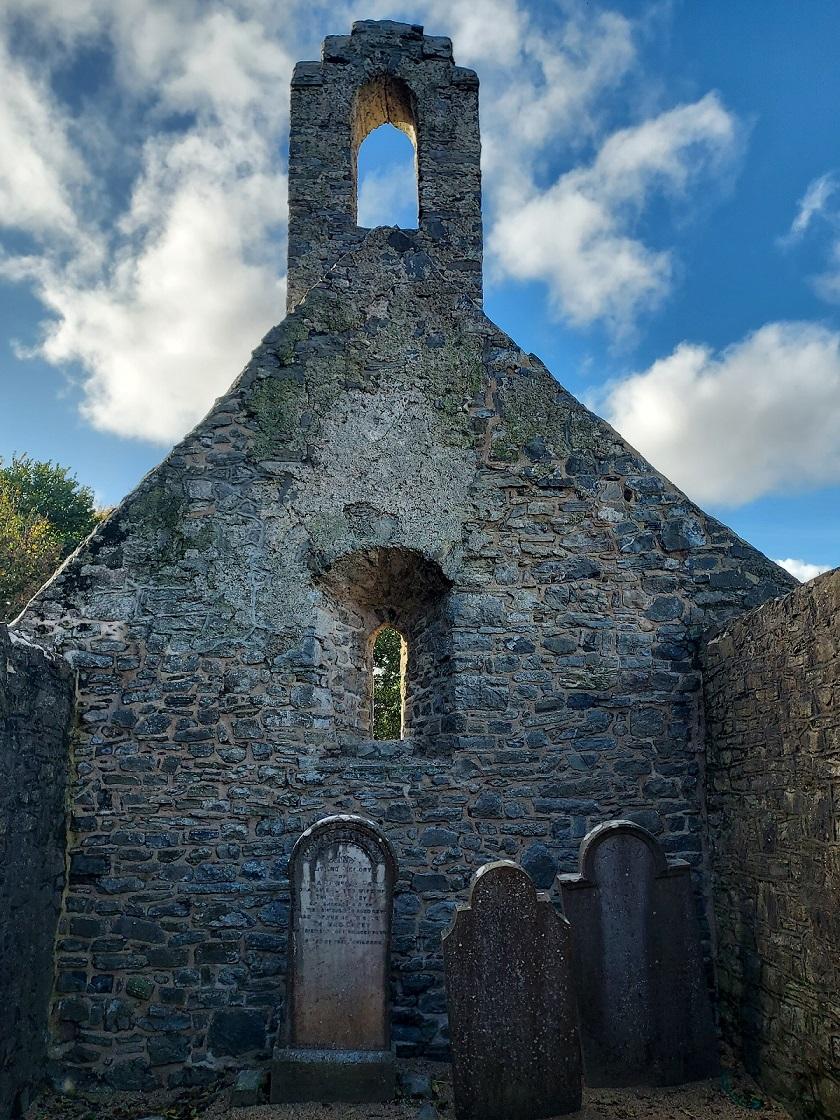
The medieval church (DU008-0074001-) was initially surveyed under CMF 2020, and a set of recommendations was formulated to repair and consolidate it into the future. Embedded ivy within the walls was suspected to be the primary cause of the cracking visible in the east and west gables of the church and this was confirmed to be the case. The cracks were stitched and packed with mortar. Cement pointing was successfully removed from the west gable. The interior ground surface was cleaned under archaeological supervision and the remnants of a table tomb was reconstructed vault (Kyle 2022-Archaeological Report ). Oliver Hearty & Sons Ltd. undertook the works overseen by Archaeology & Built Heritage Ltd., DKP Conservation Engineers and Brian O’Connor Fingal County Council Architect.
Photo: St Catherine’s medieval church
Rush Tower House (€85,000)
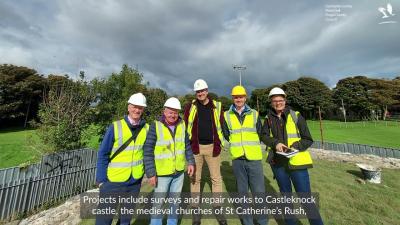
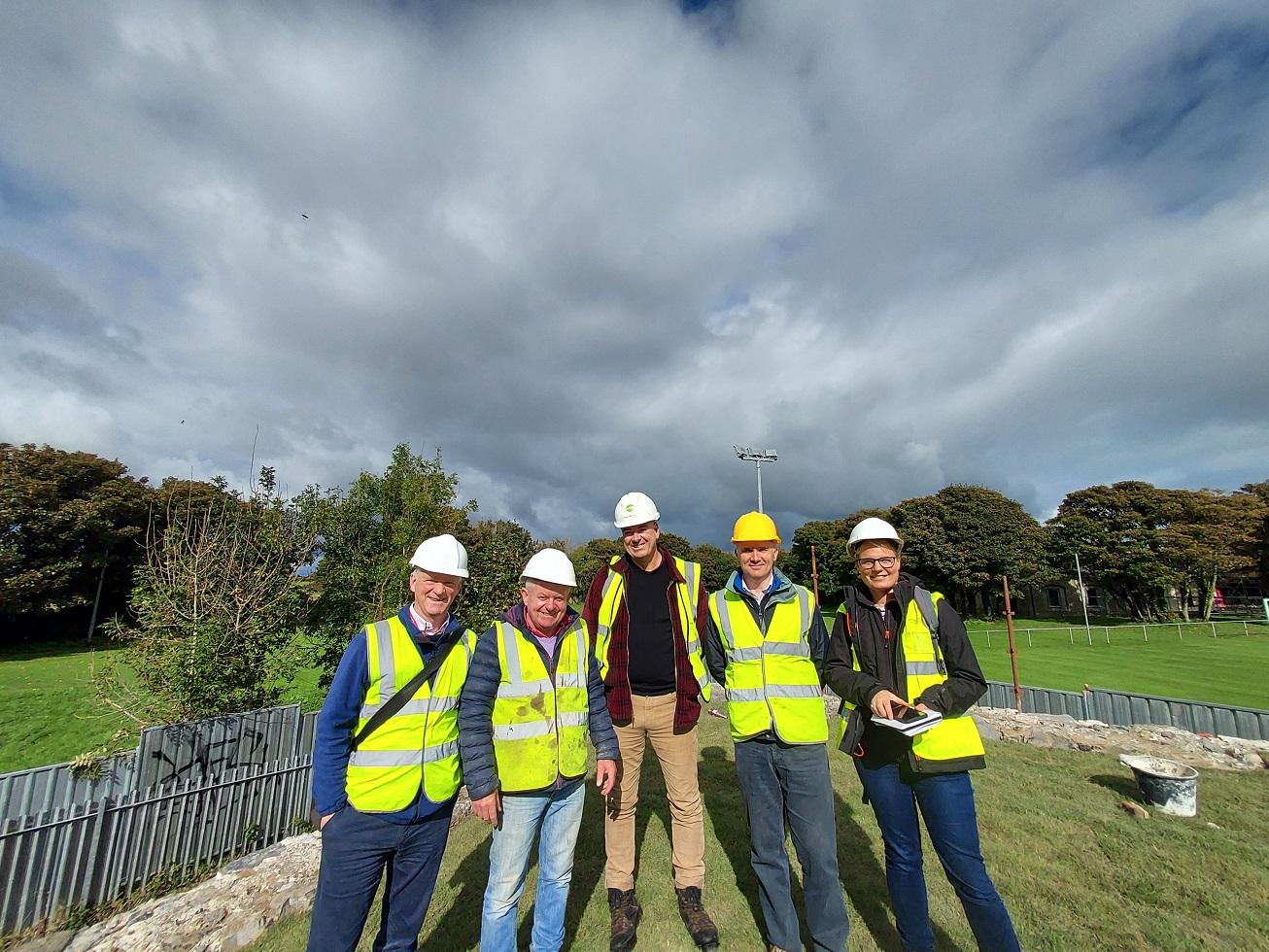
Rush Tower House (DU008-003-----) is located within the open space of the St Catherine’s housing estate, in view of the medieval church of St Catherine’s’. Rush tower house was initially surveyed under CMF 2020. The site of anti-social behaviour extensive debris and graffiti was removed. Architectural fragments uncovered including a dimension stone and quoin stone were reused. The top of the vault was soft capped and the stair and windows enclosed with galvanised steel. The measures implemented are sympathetic to the ruin and it’s setting and will deter casual entry and climbing to the vault (Kyle 2022- Archaeological Report). Oliver Hearty & Sons Ltd. undertook the works overseen by Archaeology & Built Heritage Ltd., DKP Conservation Engineers and Brian O’Connor Fingal County Council Architect.
Photo: Rush Tower House site inspection
St Columba’s Towers Swords (€85,000)
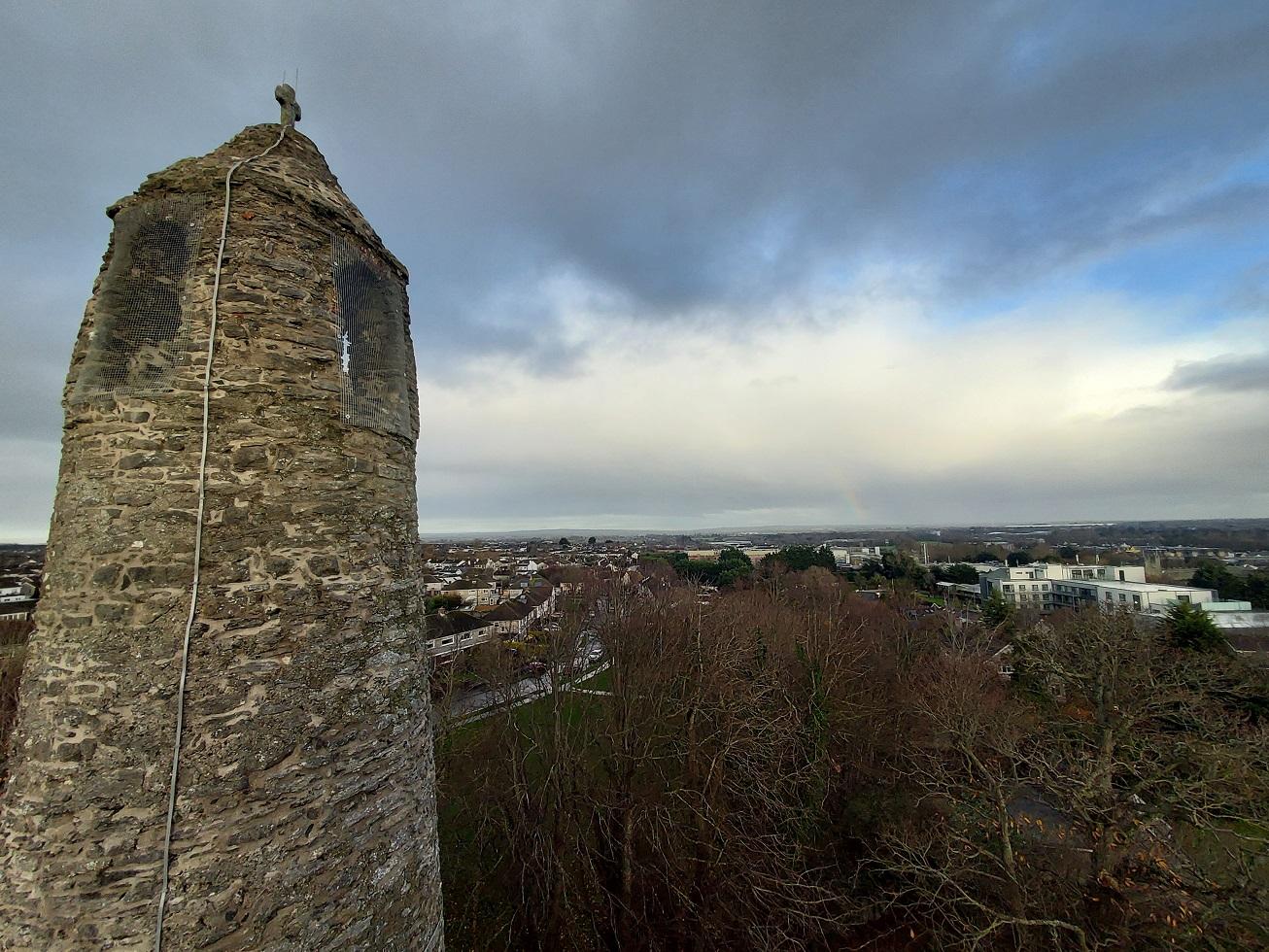
Conservation works concentrated on the round tower (DU011-034005) and medieval square tower (DU011-034004) of St Columba’s, Swords. The scope of works had been identified in 2021 thanks to CMF funded surveys and Conservation Management Report. The roof of the round tower was in a precarious condition and the stone roof was consolidated by relaying loose stones and repointing masonry joints. The columns framing the window openings were stabilised and eroded masonry joints were repointed on the externally on the top floors Archaeological report.
The dressed stone window surrounds on the west and north elevation of the square (or belfry) tower had been identified as being at risk. Damage to the dressed stone affecting its structural stability was repaired by grafting new stone onto the original with stainless steel dowels and epoxy resin. The masonry behind the dressed stone was consolidated in-situ using lime mortar.
Both towers have benefitted from this phase of works, securing areas that were previously identified as being at risk. Revamp Construction Ltd. undertook the works, overseen by Trim Archaeological Projects, DKP Conservation Engineers and Margaret Quinlan Conservation Architects.
Photo: St Columba’s Round Tower, Swords
Moat Wood, Naul (€30,000)
A Conservation Management Plan was prepared, informed by geophysical and ecological surveys. An open day was held to inform the wider community of the results of the surveys and attendees were invited to fill in a heritage questionnaire. The objectives to raise awareness, study and devise policies and actionable plans for the long-term preservation of Moat Wood barrow (DU004-005--) have been achieved Moat Wood Conservation Management plan.
Team: Trim Archaeology Projects Ltd., Earthsound Geophysics, Wildlife Surveys Ltd. and Naul Community Council.
Photo: Community Day, Moat Wood, courtesy of Ian Lennon, Naul Community Council
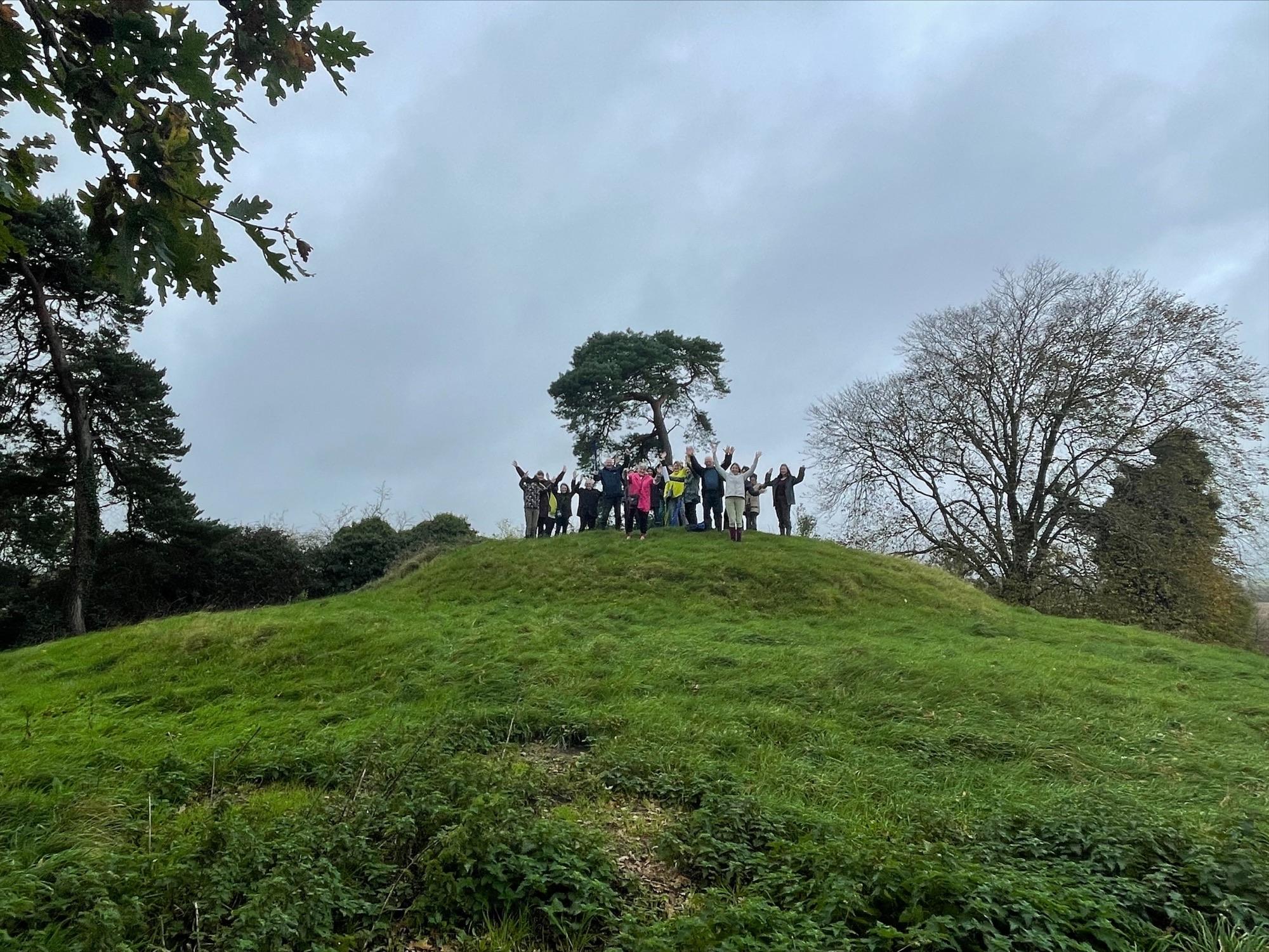
Balrothery Tower House (€21,648)
Balrothery tower house is located south of a laneway which runs E/W along the south side of the church and also forms part of the townland boundary between Balrothery and Glebe South. It is one of just fifteen extant tower houses that survive in Fingal. The preparation of a Conservation Management Report was undertaken by a multi-disciplinary team- Margaret Quinlan Architects, David Kelly Partnership, The Blackfriary Archaeology Field School and Tir3D Survey. A key objective of the report is to enable the local community to conserve and preserve the archaeological, architectural, cultural and natural heritage of the historic ruin by identifying the significance, issues and works required as well as provide the necessary guidance to appropriately address the site’s conservation, access and interpretation.
Photo: Balrothery Site Inspection
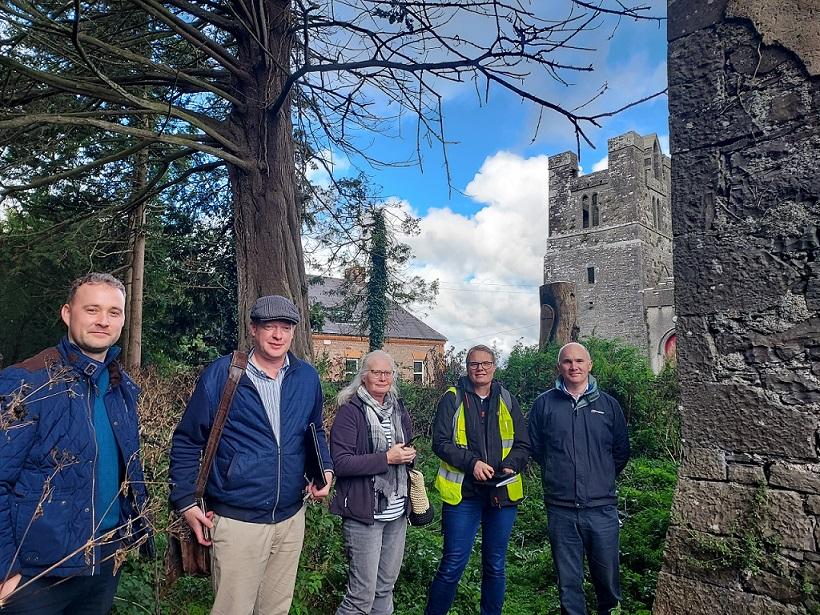
St Mary’s Clonmethan, Oldtown (€21,635.70)
The preparation of a Conservation Management Plan (CMP) for St Mary’s Church of Ireland church and graveyard, which is on the site of the medieval parish church and graveyard of Clonmethan was undertaken by a multi-disciplinary team Clonmethan Conservation Plan. A key objective of the CMP is to enable the local community to conserve and preserve the archaeological, architectural, cultural and natural heritage of the historic graveyard and church ruin, as well as provide the necessary guidance to appropriately address issues concerning the site’s conservation, access and interpretation. Led by Dr Kim Rice of AMS Ltd. the specialists included Flynn Furvey Environmental Consultants, Goodwin-Arborist, Sheridan Woods Nolan Architects & Urban Planners, Eamon Doyle & Associated Consulting Engineers and the Friends of Clonmethan.
Photo: St Mary’s Church and graveyard, Clonmethan, Oldtown
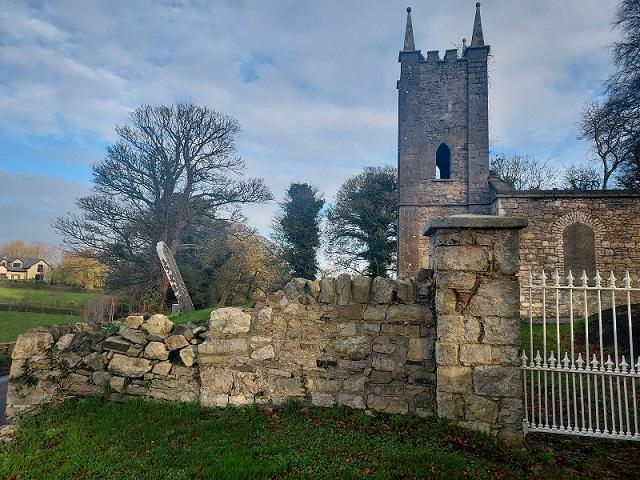
Iniúchadh Seandálaíochta Dhomhnach Bat Port Reachrann (€2,826.45)
Tá séadchomharthaí taifeadta díchosúla i leithinis Dhomhnach Bat-Portane ó imfháluithe fodhromchla, toibreacha beannaithe, séipéil agus reiligí go túirthí, cuanta agus muilte taoide a dteastaíonn cur chuige iomlánaíoch uathu i leith ateangaireachta. Tá an oidhreacht mhuirí agus chósta suntasach freisin mar aon leis an diméin thionsclaíoch, chultúrtha, stairiúil agus oidhreacht ailtireachta le sócmhainní díchosúla ó fhuinneoga Harry Clarke sa séipéal i nDomhnach Bat go dtí túir martello cósta. Rinne seandálaithe ó Trim Archaeological Projects Ltd iniúchadh ar gach láithreán seandálaíochta taifeadta. measúnú a dhéanamh ar riocht reatha agus inrochtaineacht agus saintréithe tírdhreacha an láithreáin; a n-oiriúnacht don léirmhíniú a shuíomh agus gazetteer den fhaisnéis seo a tháirgeadh chun cur le hIniúchadh Oidhreachta Dhomhnach Bat Portane.
Léigh Tuarascáil agus Fardal Shócmhainní Seandálaíochta Leithinis Phort Reachrann-Dhomhnach Bat link archaeological audit report here
Grianghraf: Port Reachrann, le caoinchead TAP Ltd.
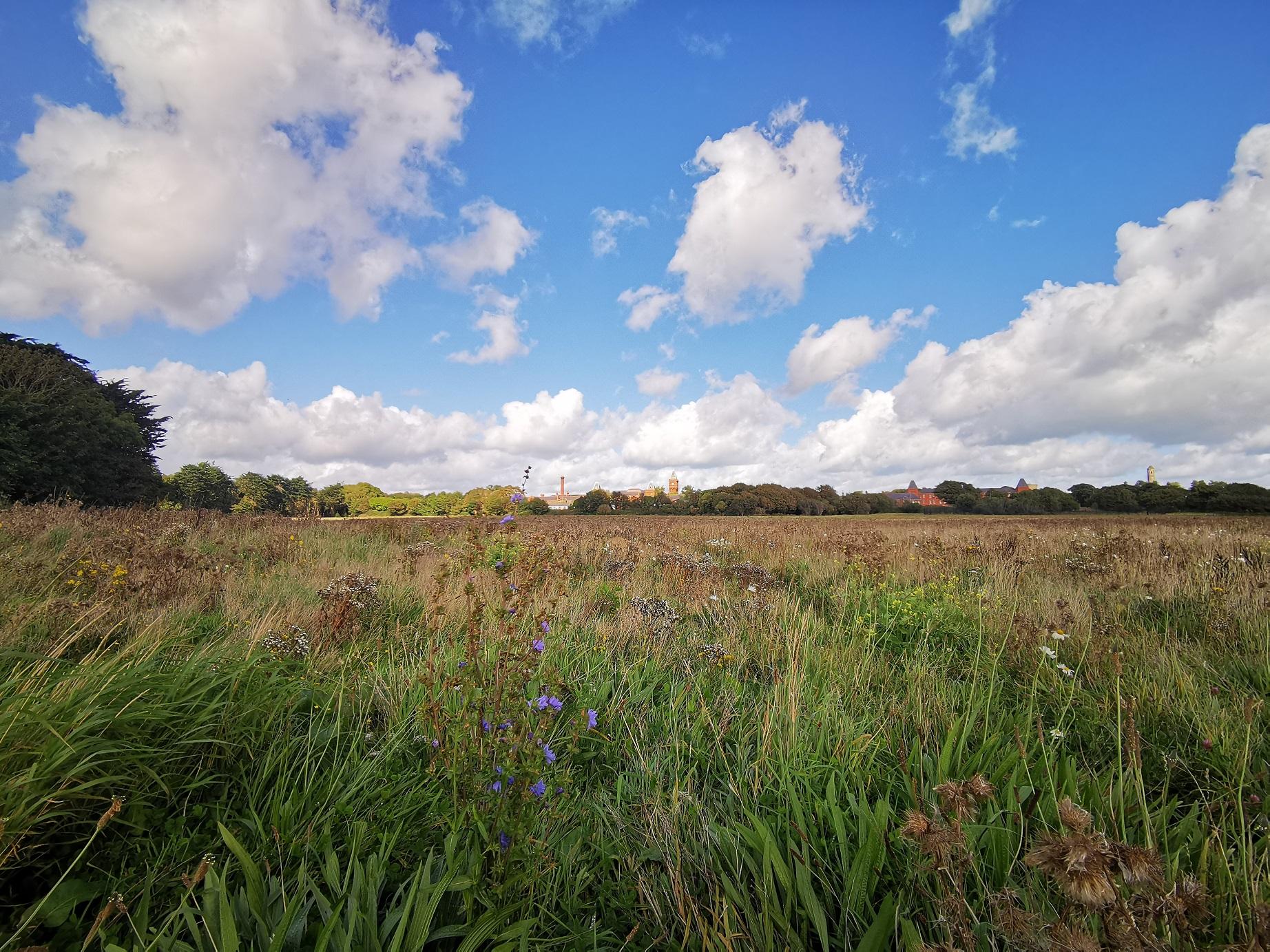
Oibreacha Chaisleán Cnucha (€85,000)
Suite ar chruinniú mullaigh créfoirt ollmhór a aithníodh mar an Cnucha réamhstairiúil déanach sna dánta Dinshenachas, measadh gurb é caisleán Chaisleán Cnucha (DU017-12002-) an príomhdhaingean i gcomharsanacht Bhaile Átha Cliath tráth ionradh na nAngla-Normannach. Bronnadh é ar Hugh Tyrell i 1173 agus d'fhan sé i lámha na mBonn ar feadh ocht nglúin le briseadh gairid nuair a thóg Edward Bruce an caisleán i 1316. Is é cáil gurb é an chéad chaisleán cloiche a tógadh in Éirinn, a choinneáil polagánach ar cheann de thrí shampla áirithe dá leithéid in Éirinn - Baile Átha Luain agus Seanid na cinn eile. Tá baint ag na trí cinn le donjons déanacha an 12ú haois de phlean den chineál céanna sa Fhrainc agus i Sasana. Oibríonn CMF 2021 le foireann ildisciplíneach dírithe ar chreatlach an choimeád agus is éard a bhí ann ná an moirtéal aoil agus uasteorannú cloiche bharr bhalla an choimeád a chríochnú agus na tacaíochtaí cruach do lintels pasáiste ar an gcéad urlár a athsholáthar le saoirseacht agus tacaíochtaí cruach nua. Thug Summit Conservation and Restoration Ltd faoi na hoibreacha a ndearna an fhoireann tionscadail maoirseacht orthu; Kieron Broderick (bainisteoir tionscadail); Dermot Nolan (innealtóir caomhantais); Alan Hayden (seandálaí), Basil Conroy (QS). Thacaigh ord Uinseannach agus Comhairle Contae Fhine Gall leis an tionscadal. Tá físeán curtha le chéile ag mic léinn na Chéad Bhliana i gColáiste Chaisleán Cnucha chun feasacht agus meas méadaithe a chothú ar an séadchomhartha atá ar fáil le feiceáil anseo https://youtu.be/27ZtE4UYMQk
Grianghraf: Caisleán Chaisleán Cnucha, amharc ón gcoinneáil
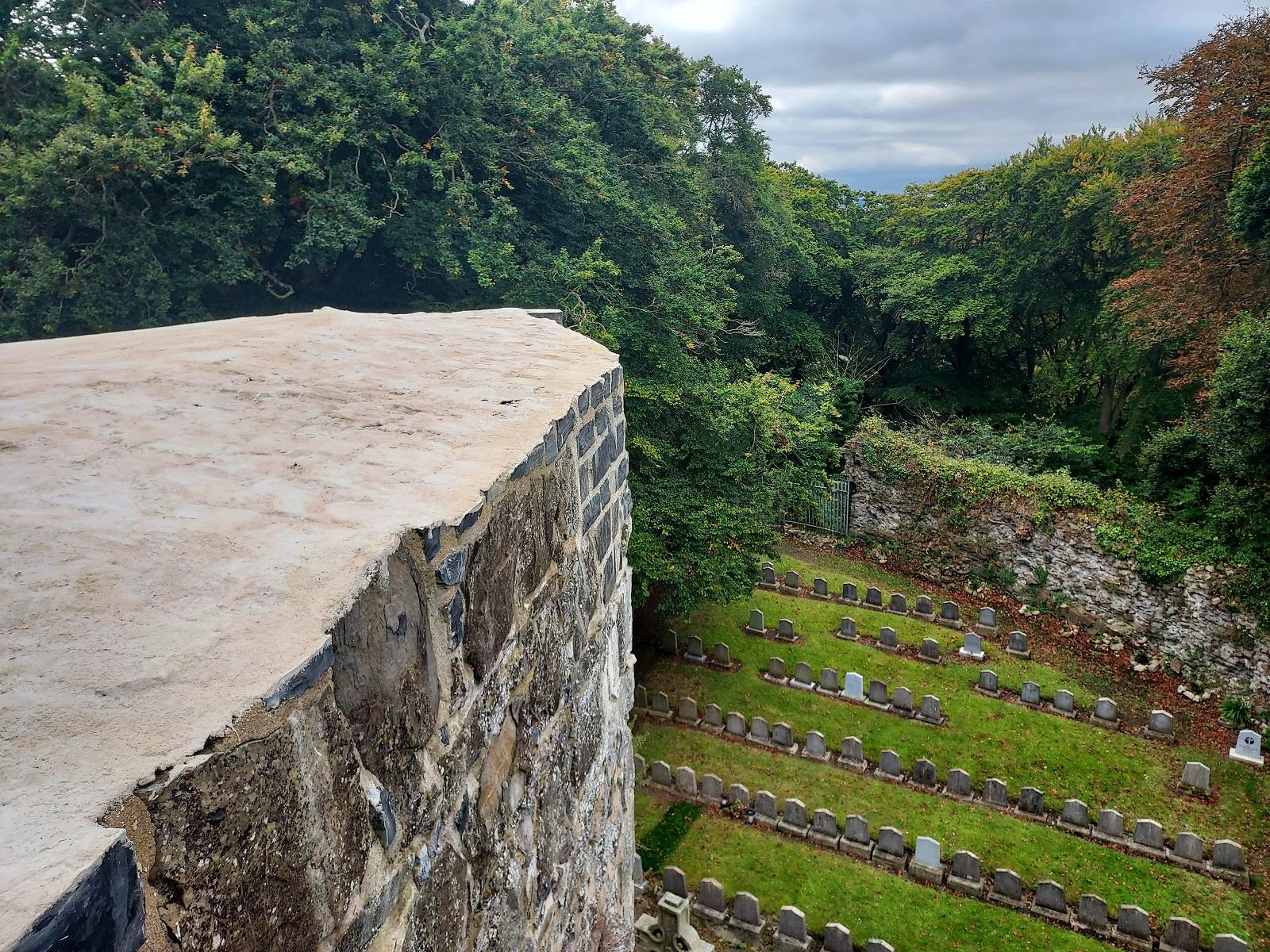
Oibreacha Reilige Chill tSáile (€42,778.24)
Thit balla reilig Chill tSalcháin (DU011-011002) tar éis báisteach throm tar éis geimhreadh crua - sampla d'éifeachtaí carnacha na haeráide ar ár n-oidhreacht thógtha. Sa bhliain 1197 bronnadh séipéal Naomh Dáibhí ar Mhainistir San Tomás i mBaile Átha Cliath. Mar sin féin, tá rianta de chlaífort cothrom leathan taobh amuigh de bhalla na reilige ar dócha go bhfuil iarsmaí imfhálú eaglasta ann, rud a thugann le tuiscint go bhfuil dáta réamh-Normannach ann don láithreán seo. Tá an reilig ardaithe fodhronuilleogach i bplean le foirgneamh nua-aimseartha na heaglaise sa lár. Atógadh an balla a thit agus deisíodh bulge sa bhalla coinneála eile. Rinneadh oibreacha faoi mhaoirseacht seandálaíochta agus rinneadh líon beag blúirí cnámh a aisghabháil agus a anailísiú. Bhí na cnámha ó dhuine fásta amháin ar a laghad agus ógánach nach mó ná cúpla céad bliain d'aois. Thug ClanCon Ltd faoi na hoibreacha a ndearna foireann an tionscadail maoirseacht orthu; Alistair Goodwin (Ailtire); Lisa Edden, CORA (Innealtóir Caomhantais); Eoin Halpin (Seandálaí).
Grianghraf: Balla reilige deisithe, Cill tSáile
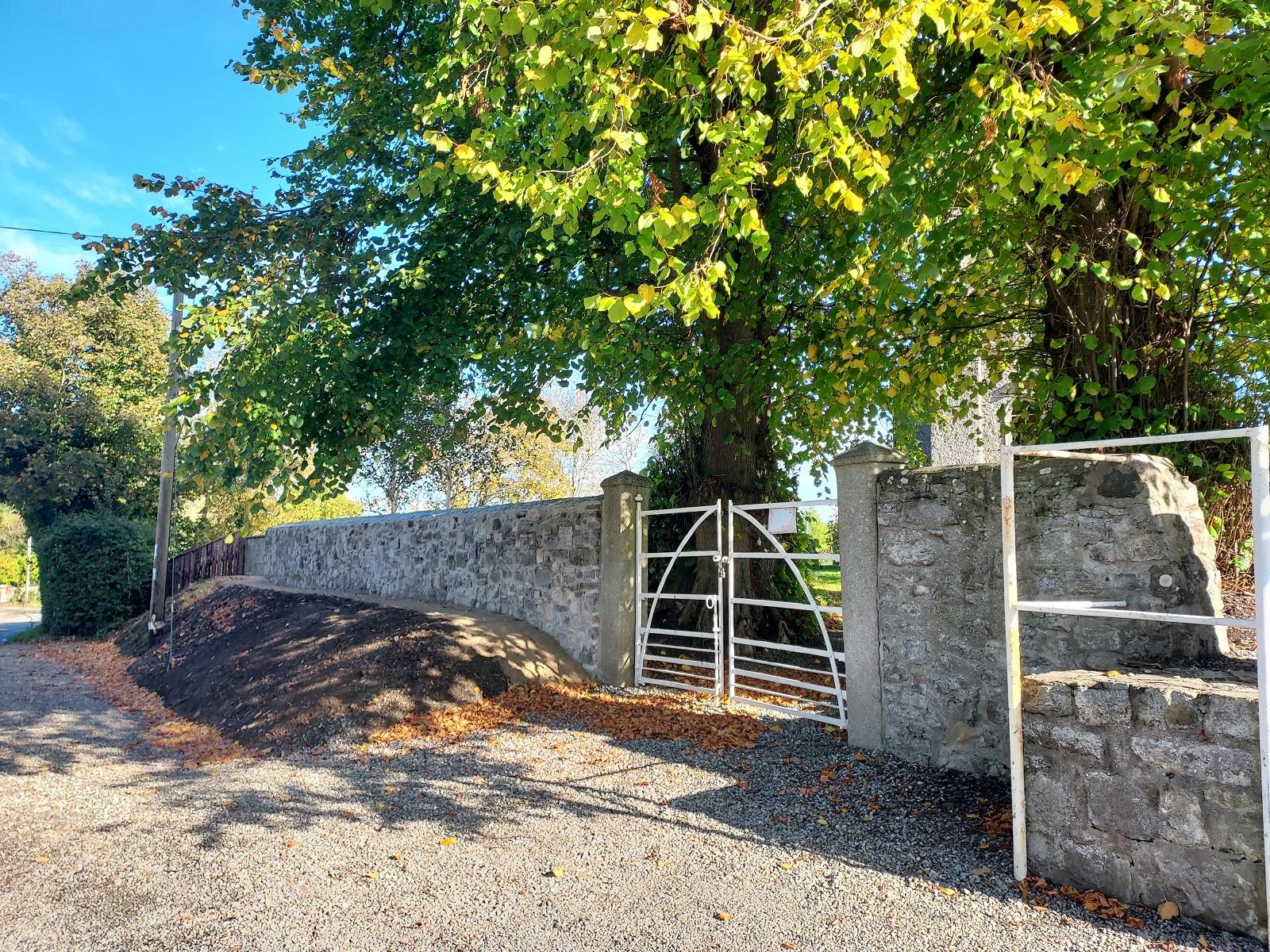
Láithreán adhlactha, Tailte an Mhuilinn Ghaoithe, Oibreacha Shoird (€40,222)
Tugadh faoi oibreacha chun an láthair adhlactha (DU011-090) a chosaint ar chreimeadh bainc agus ar athrú aeráide, laistigh de Pháirc Ghleann Abhainn an Bharda. Suite ar bhruach abhainn an Bharda mheánaigh laistigh de radharc ar lár eaglasta Naomh Colmcille agus ar shráid ard mheánaoiseach Shoird ní raibh a fhios cén uair a nochtadh cloigeann daonna sa bhruach. Tochlaíodh seisear (Ceadúnas Uimh. 99E0554). Mar thoradh ar chreimeadh breise ar bhruach na habhann chonaic muintir na háite cnámharlach nochta eile in 2020. Léirigh tochailt cnámharlach óg idir 9-11 bliana d'aois tráth an bháis. Dáta radacarbóin 1045-1225calAD (UBA-43540, 883±29 BP (McCormick nasc leis an tuairisc seandálaíochta anseo). Chun creimeadh agus nochtadh adhlacthaí amach anseo a chosc, agus tar éis dul i gcomhairle le hiascaigh intíre leagadh bolláin Na hÉireann go cúramach faoi mhaoirseacht seandálaíochta. Tá an láithreán cosanta anois ó thuilte agus beidh sé mar chuid den léirmhíniú foriomlán ar Pháirc Ghleann abhainn an bharda. Rinne Seirbhísí Fóntais Comhtháite oibreacha agus rinne Trim Archaeological Projects Ltd maoirseacht orthu (O'Carroll nasc leis an tuarascáil monatóireachta seandálaíochta anseo) agus Comhairle Contae Fhine Gall.
Grianghraf: Tochailtí Ghleann Abhainn an Bharda, le caoinchead Archer Heritage Ltd.
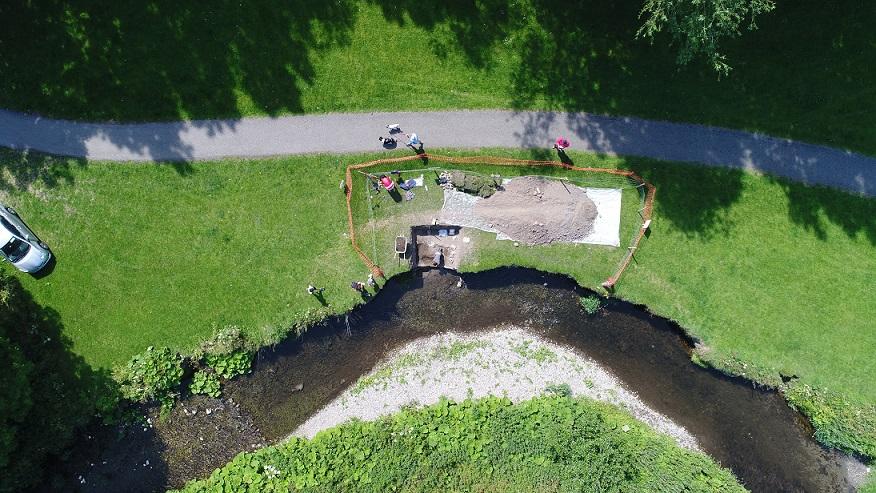
Suirbhé Thúir Cholm Cille, Sord (€30,000)
Tá coimpléasc Cholm Cille an-suntasach ag teacht chun cinn óna bhunús sa 6ú haois go dtí an lá atá inniu ann. Bainteach leis an imfhálú mainistreach is dócha go bhfuil an cloigtheach nó an teach cloig sa 10ú haois. Ardaíonn sé go ceithre stór. Is gné mharthanach é an túr belfry ón tréimhse mheánaoiseach níos déanaí. Glanadh an dá thúr as salachar colúir agus mogalra sreinge ceangailte le hoscailt na fuinneoige chun tuilleadh taiscí colúir a chosc. Baineadh 1m ar a laghad de ghuano den cloigtheach faoi mhaoirseacht seandálaíochta chun a úsáid mar chlais fuinseoige a nochtadh. Tugadh faoi shuirbhé seachtrach ar dhróin, tuarascáil ar riocht struchtúrach agus tuarascáil ar chomhthéacs stairiúil. Trí na fadhbanna struchtúracha a mheas agus trí na bearta chun déileáil leo a leagan amach, cuideoidh na suirbhéanna le meath a chosc agus na séadchomharthaí a chosaint amach anseo agus cuireann siad an suíomh sa chomhthéacs náisiúnta agus áitiúil, ag cur leis an gcorpas eolais faoin láithreán agus a thábhacht. I measc na foirne ildisciplíneacha bhí an tAiltire Caomhantais Margaret Quinlan; Innealtóirí Caomhantais DKP Ltd.; Seandálaíochta Bhaile Átha Troim agus an Dr Rachel Moss.
Grianghraf: Cloigtheach Cholm Cille le caoinchead ó Thionscadail Seandálaíochta Bhaile Átha Troim.
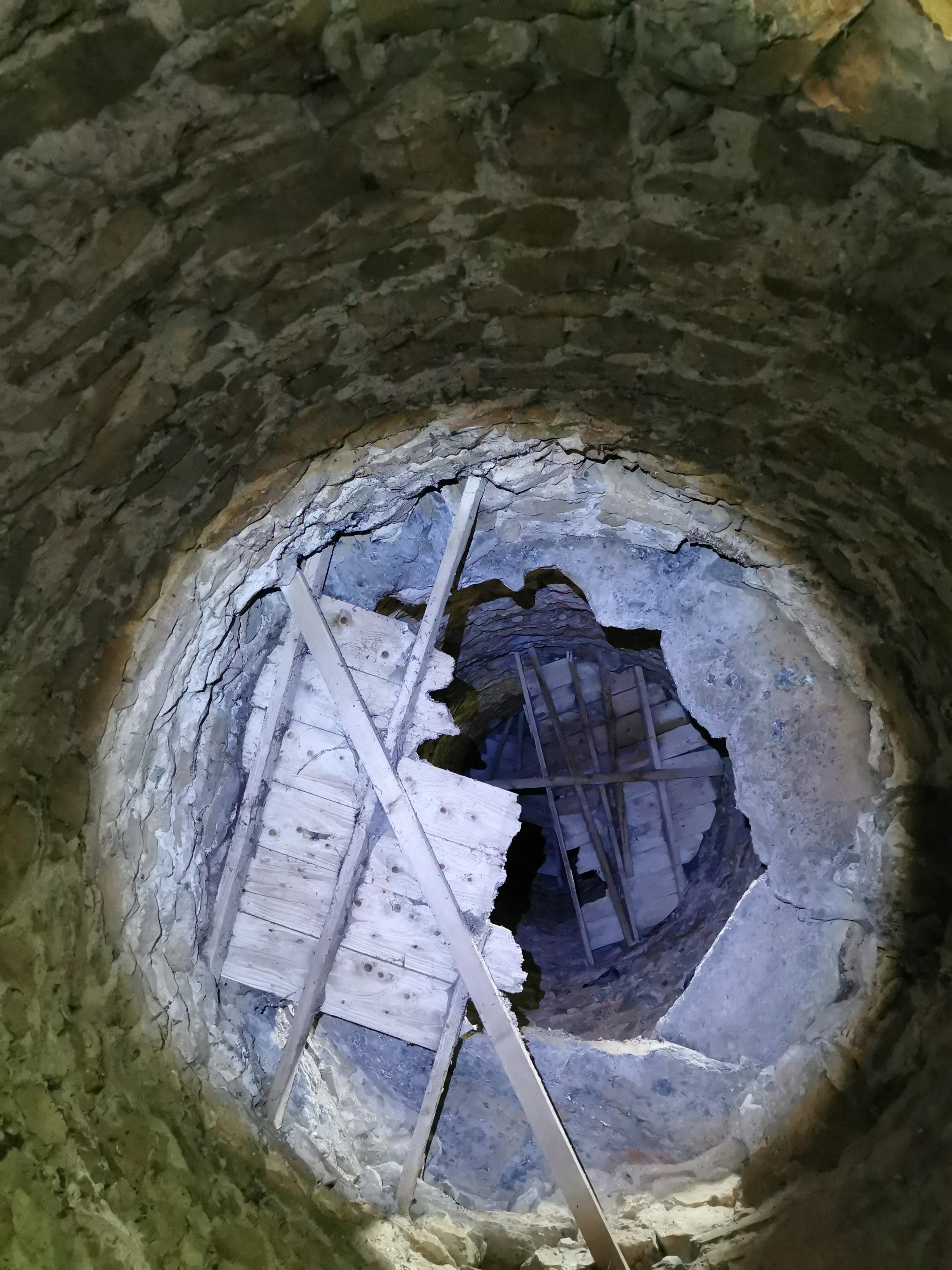
Suirbhé Eaglaise Mhullach Íde (€30,000)
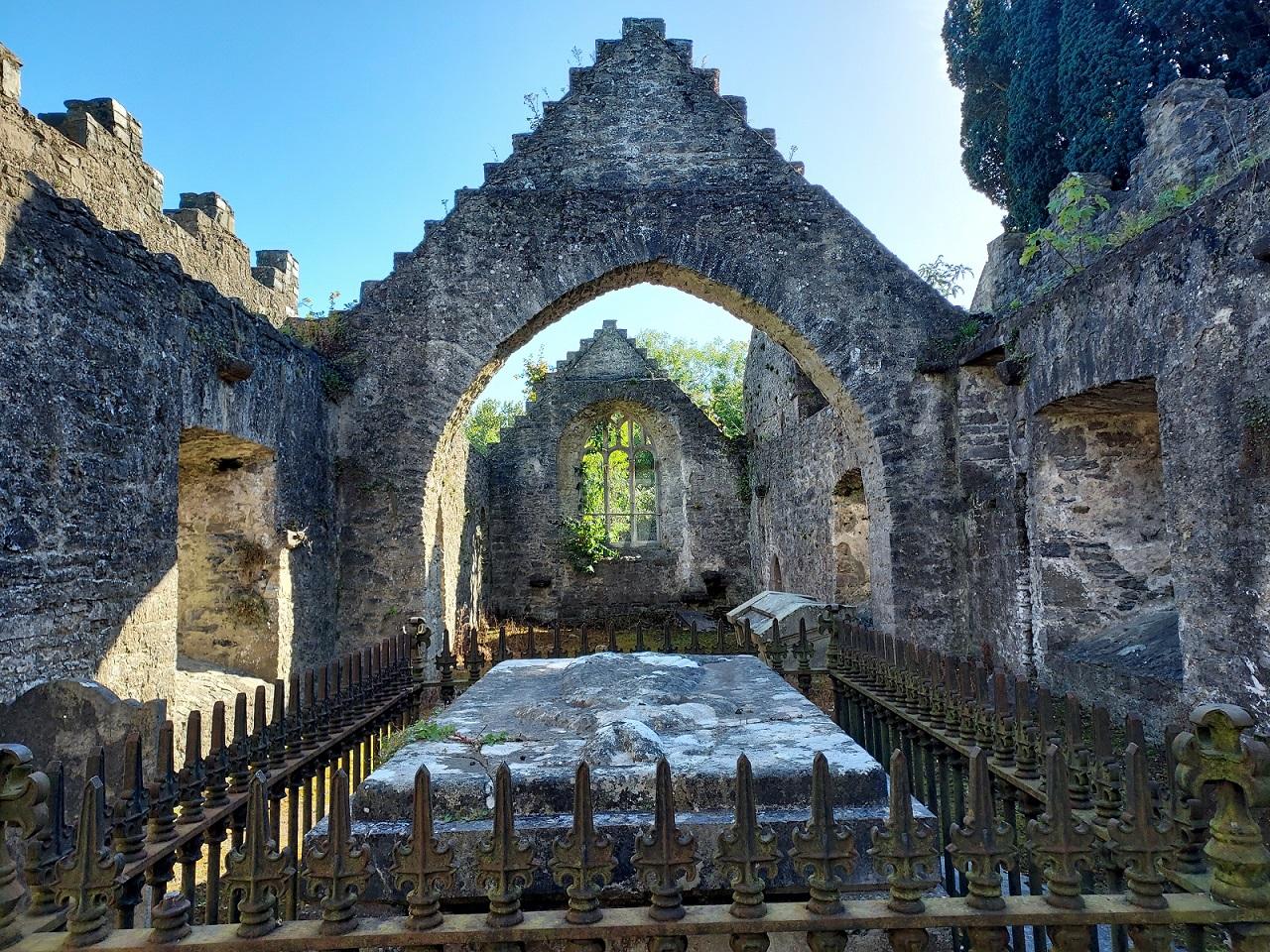
Tá Séipéal agus Reilig Mhullach Íde (DU012-031) suite go lárnach i gcoimpléasc stairiúil an chaisleáin, na gclós, na ngairdíní agus na páirce níos leithne de Dhiméin Chaisleán Mhullach Íde. Tagann thart ar 600,000 cuairteoir go Diméin Mhullach Íde gach bliain, agus téann an chuid is mó acu thart ar an Mainistir agus timpeall na Mainistreach. Mar chroílár amhairc an láithreáin oidhreachta níos mó, tugann a shuíomh deis spéis sa 'Mhainistir' agus sa Reilig a léirmhíniú agus a spreagadh do líon mór den phobal cuairte. Is iad an suirbhé taifeadta agus an tuarascáil ar an gcoinníoll na chéad chéimeanna chun an creimeadh agus na bagairtí struchtúracha ar an séadchomhartha a ghabháil, ag tógáil in athléimneacht i leith Mhainistir Mhullach Íde agus reilig don todhchaí agus í a chothú. Féach ar an suirbhé anseo
Grianghraf: Eaglais Dhiméin Mhullach Íde Istigh
Suirbhé Ar Theach Thúr Eaglais Chaitríona agus An Rois (€30,000)
Tá Séipéal Naomh Caitríona sa mheánaois (DU008-00401) agus túrtheach an Rois ón 15ú haois (DU008-003 --) suite i gcuid de mhainéar meánaoiseach atá dílsithe d'Iarla Urumhan ó aimsir Éadbhard Éadbhard 1ú go dtí 1641. Tá na séadchomharthaí anois ar gach taobh den bhóthar isteach in eastát tithíochta Naomh Caitríona. Baineadh fásra as Teach Thúr an Rois agus rinneadh suirbhé ar an suíomh. Rinneadh suirbhéanna riochtaí ar an séipéal agus ar an túrtheach araon agus cuirfidh na sonraíochtaí suirbhé agus innealtóireachta bonn eolais faoi chéimeanna oibreacha amach anseo. Suirbhé Theach Túir an Rois anseo https://bsdata.blob.core.windows.net/dashboards/2EZKILAWLH/index.html
Grianghraf: Séipéal Chaitríona, An Ros
Suirbhéanna ar Chaisleán Bhaile Lanis, Domhnach Bat agus Séipéal Naomh Mártanóg, Port Mearnóg (€30,000)
Is túrtheach ón 15ú haois é Caisleán Bhaile Lanis (DU012-004-) atá suite gar don bhealach isteach chuig Diméin an Droichid Nua. Is dócha gur thóg teaghlach de Bathe é ar bronnadh mainéar Bhaile Lanes orthu i 1376 agus a choinnigh é ar feadh roinnt glúnta. Ní mór fásra suntasach a bhaint le breis agus deich mbliana anuas chun go bhféadfaí suirbhé tomhaiste a dhéanamh. Is séipéal meánaoiseach déanach (DU015-00701) i bPort Mearnóg é Eaglais Naomh Marnóg. Tá an dá shéadchomhartha aitheanta mar thosaíochtaí d'oibreacha caomhnaithe ag foireann Séadchomharthaí i mBaol Fhine Gall. Cuirfidh na tuarascálacha bainte, suirbhé agus riochta fásra arna maoiniú ag Ciste na Séadchomharthaí Pobail 2021 bonn eolais faoi oibreacha amach anseo chun na struchtúir a chomhdhlúthú agus athléimneacht a chruthú i bhfianaise an athraithe aeráide. Suirbhé Chaisleán Bhaile Lanis anseo https://bsdata.blob.core.windows.net/dashboards/IOFOUE3K49/index.html
Grianghraf: Caisleán Bhaile Lanis, Diméin an Droichid Nua