
Burrow Beach information
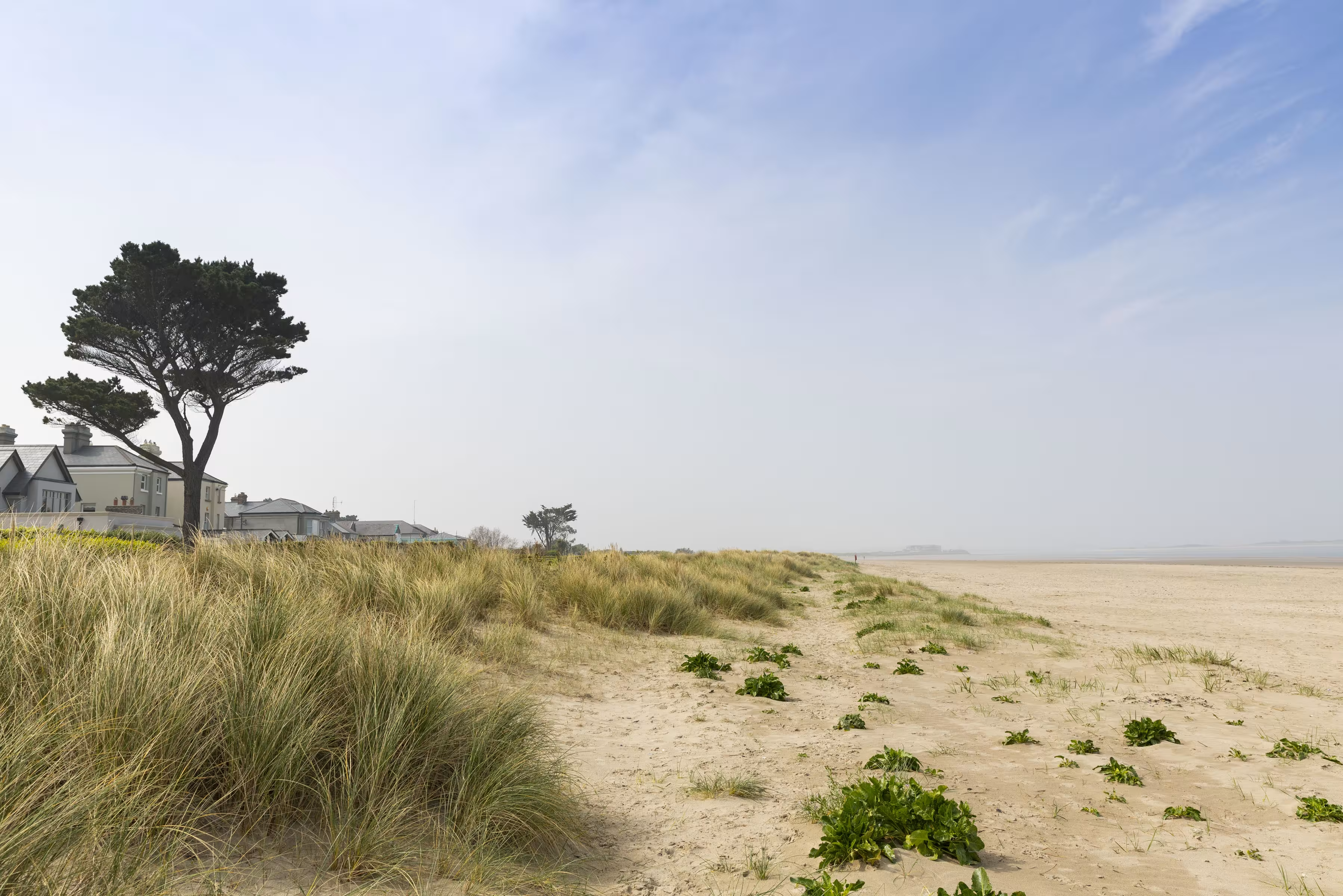
Burrow Beach, Sutton
Trá Poll, Cill Fhionntan
What's in a name?
Sutton, the narrow isthmus that connects Howth Head to the mainland, was originally divided into two townlands, the Burrow and the Quarry.
It is possible that Sutton got its name from a family who resided in the area. John deSutton is mentioned in a jury record from the 13th century, along with a member of the St Lawrence family (A History of the County Dublin, Part V, Francis Elrington Ball).
Lambay Island and Ireland's Eye
Lambay is the largest Island off Ireland's east coast and was referred to as early as 150 A.D. by the Greeks as Limnus or Limni, meaning snail, because of it's silhouette. Lambay, the name given to the island by Norsemen comes from the practise of sending ewes to the island in spring time. Colmcille visited Lambay in the 6th century and established a monastery there.
Because of their location and strategic importance both Islands visible from the beach suffered many attacks over the centuries. The Vikings came to Lambay in 795, raided the monastery there and used the island as a base for attacking Fingal. They also plundered Ireland's Eye in 960. Lambay became a haunt for pirates in the 15th century and was subsequently populated by English colonists to drive smugglers off.
Lambay became the home of the Baring family in 1904 and the architect Edward Lutyens was engaged to restore the old castle. Lord Revelstoke, one of the Barings, and his family continued to live there and farm the Island. Cows and sheep graze on Lambay alongside its most unusual residents, the wallabies.
Nature Conservation
Lambay and Ireland’s Eye are both designated nature conservation sites. Lambay is internationally important for its breeding seabirds, and it has the biggest seabird colony in Ireland. Breeding species include guillemot, razorbill, kittiwake, herring gull, shag, cormorant and puffin. In winter, greylag, barnacle and brent geese can also be seen on the island. Lambay supports the only colony of grey seals on the east coast. Ireland’s Eye also supports colonies of gannet, black guillemot and great black-backed gull.
Where to from here?
Distances and times are approximate
• Claremont Beach, Howth is 1.75km away (low tide access only)
(a 30 minute walk).
• Velvet Strand, Portmarnock is 6.5km away
(a 120 - 130 minute walk).
DISCLAIMER
OCCUPIERS LIABILITY ACT, 1995
TAKE NOTE that Fingal County Council maintains the pedestrian paths and as the occupier of these lands, in accordance with Section 5(2) of the Occupiers Liability Act, 1995, HEREBY EXCLUDES the duty of care which it owes to visitors under Section 3 of the said act, in respect of injury or damage caused to visitors and their property by reason of any danger existing on the paths and lands.
SAFETY NOTICE
Please note swimming hazard on map.
Walkers should exercise caution at all times.
BEACH CODE
Please use bins where provided or take your litter home with you.
Drinking alcohol on this beach is prohibited under the Prohibition of Consumption of Intoxicating Liquor on roads and in public places Bye Laws 2002 made under the local government Act 1994.
Cars are parked at owners risk.
Dog Owners are responsible for cleaning up dog faeces under Section 22 of the Litter Pollution Act 1997.
From May to September inclusive, no horses are permitted on the beach between 10am and 9pm. From October to April inclusive, no horses are permitted on the beach on Saturday, Sunday and Bank Holidays between 10am and 9pm.
LIFEGUARD
Red over yellow means there is a lifeguard on duty.
No flag means there is no lifeguard on duty and it is unsafe to swim
A red flag means it is unsafe to swim at all times.
To contact Fingal County Council phone:
01 8905000 (during office hours)
Emergency Services Number
For Emergency services Phone: 112
LIFEGUARD TIMES
Month of June weekends only
(11.00am to 7.00pm)
July to August Fulltime
(11.00am to 7.00pm)