Four-year journey of the Seanchaí Microforest at Blakestown Community School documented in new publication
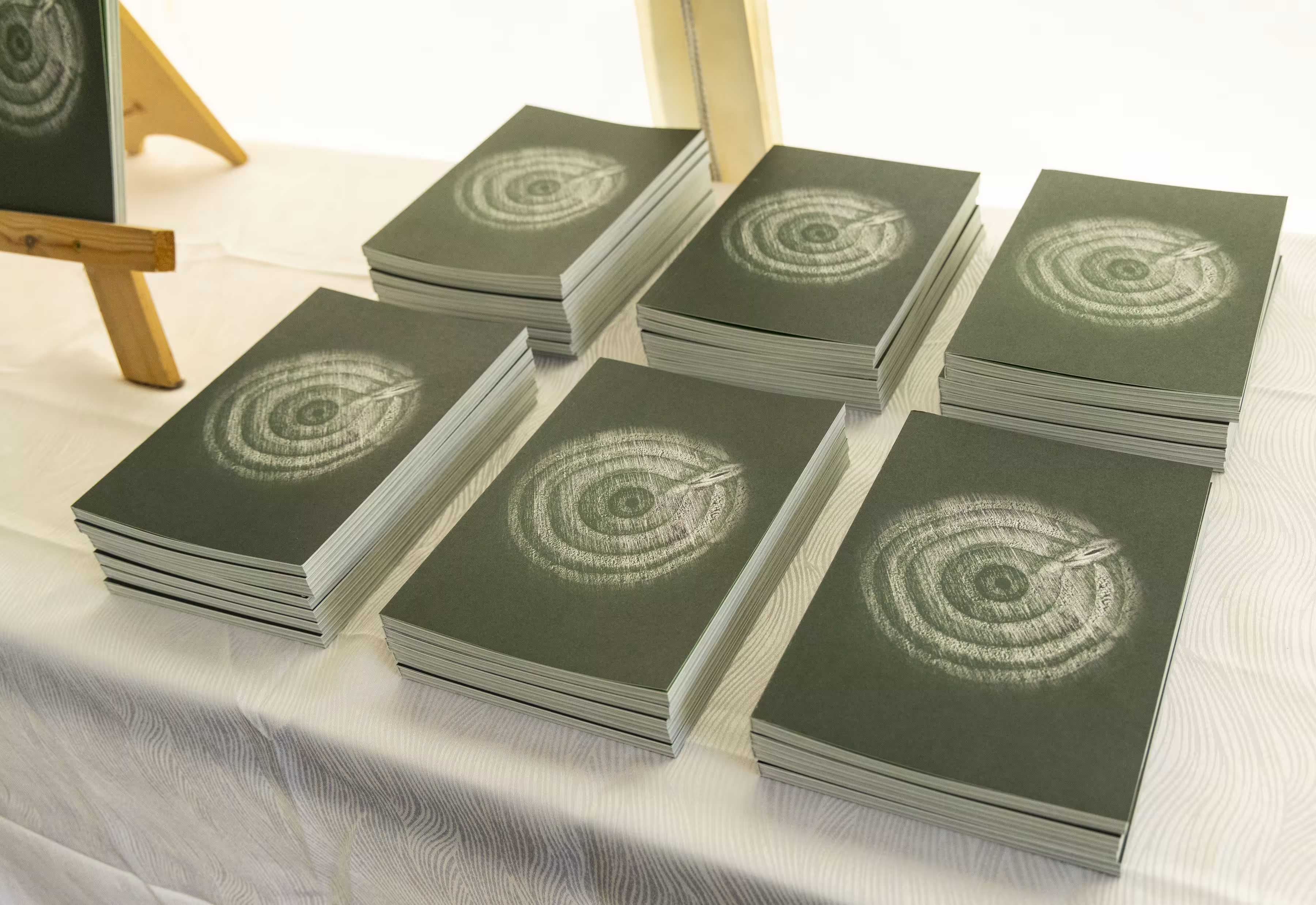
A new publication showcasing the journey of the Seanchaí Microforest, a student-led, arts-in-education initiative developed by artist Gareth Kennedy in collaboration with Superprojects and Fingal County Council’s Youth and Education Programme, is set to be released to the public soon. The 100-page book, featuring photographs and illustrations throughout, documents 40 engagements across four years in the Microforest at Blakestown Community School, and aims to inspire others to transform underused spaces into environments for learning, wellbeing, and renewal
The project was conceived by artist Gareth Kennedy as a “hedge school for the 21st century”. The initiative began in 2020 when Superprojects and Fingal Arts Office identified a need to work creatively with young people and artists outdoors during the pandemic. Over a four-year process, the microforest was planted, nurtured and named by the students of Blakestown Community School. The ‘Seanchaí’ references the custodian of tradition and shared knowledge.
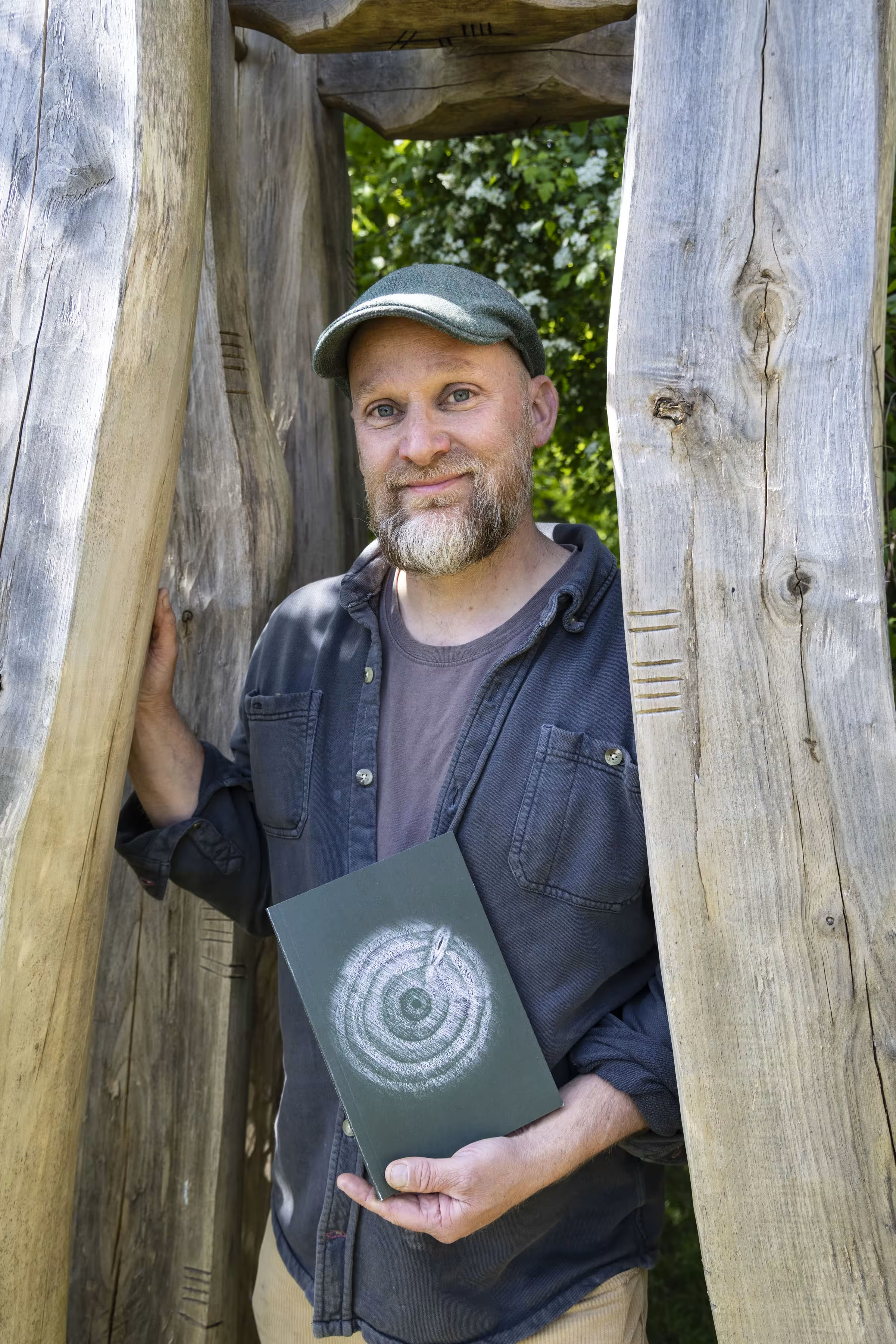
Speaking on its origins, Gareth Kennedy said, “The idea of planting the microforest was to create a living habitat, where learning is embodied, sensory and collaborative. It reframes the school environment as a place where ecosystems and creative practice can grow together, connecting ecology with creative and traditional practice in a shared process of care and co-creation”.
Students learned a wide range of practical skills, including green wood carving and woodturning, understanding how trees become timber, and exploring the potential of acorns. They made charcoal, created dyes and pigments from plants, cooked over an open fire, and prepared woodland tonics. Students carried out bird and insect surveys, learned to identify flora and fauna that call the microforest home and created artistic responses through drawing, charcoal, inks and paint. They developed skills in making cordage from knotweed and other invasive plants, engaged in hands-on stewardship of the space and took part in drumming and song circles.
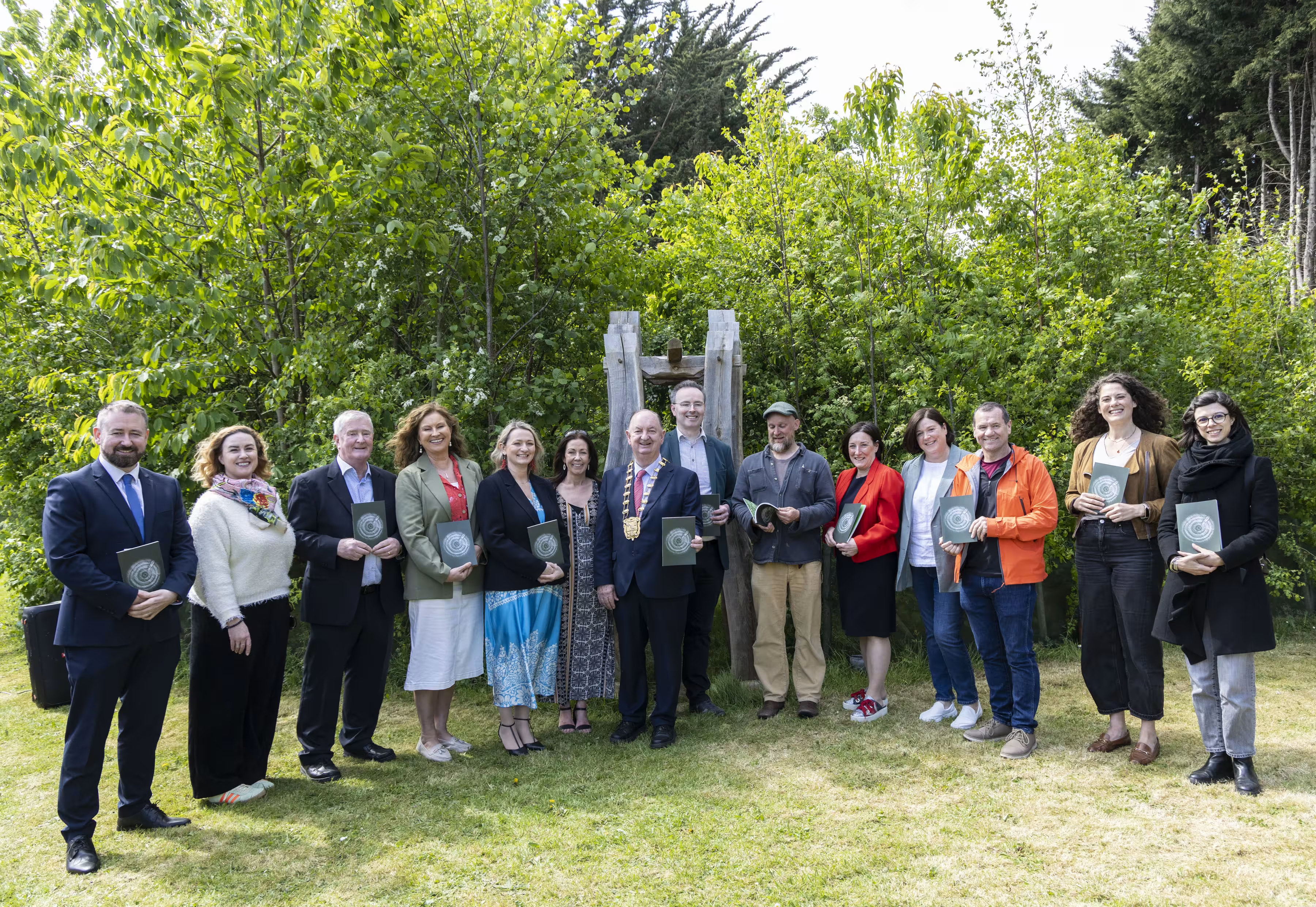
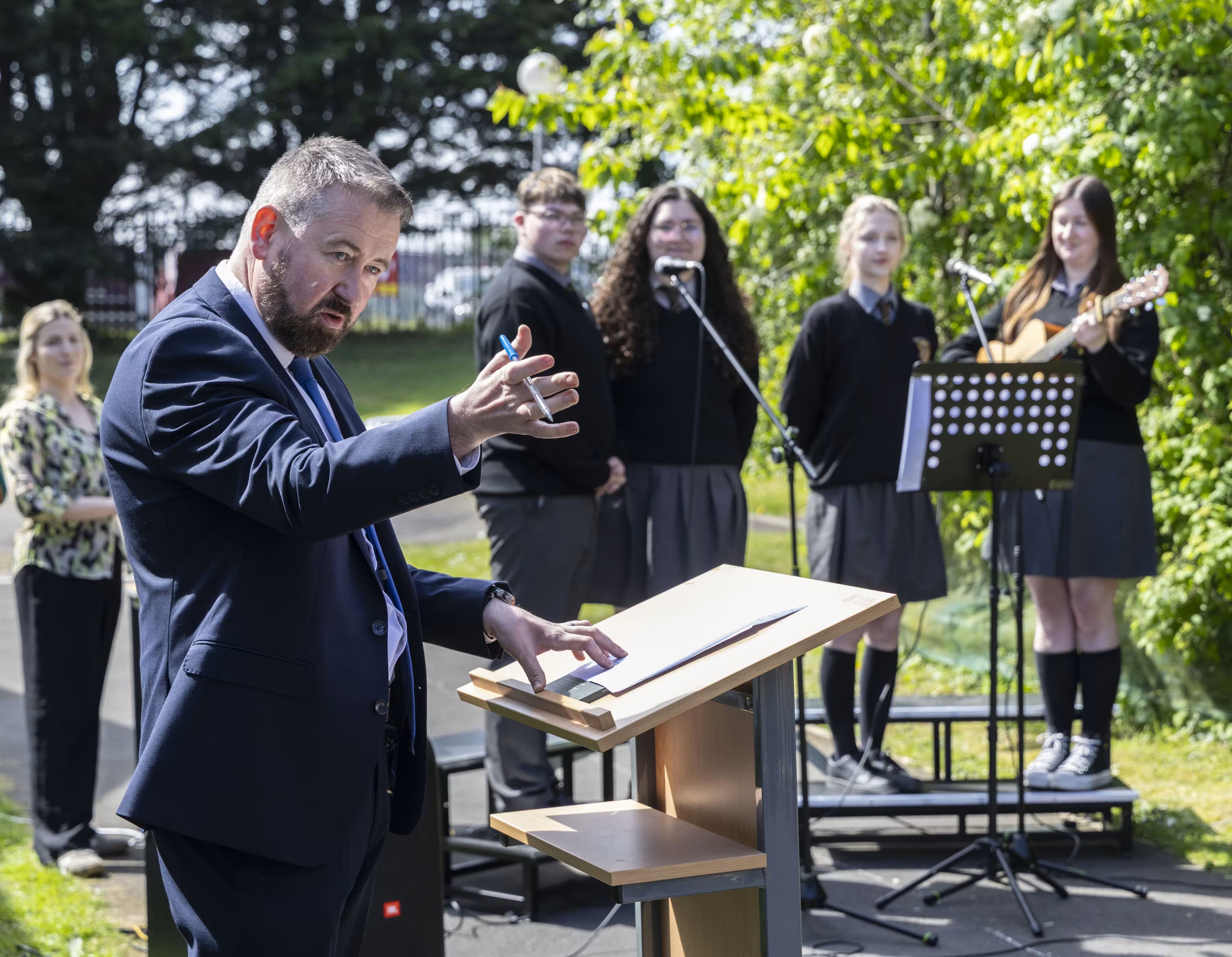
Speaking at the launch of the new book, Cllr. Tom O’Leary, Mayor of Fingal, said: "I believe that this microforest is in good hands, because its true strength lies in its custodians, the students of Blakestown Community School, who will continue to care for it and carry its values forward. This beautiful publication will inspire more schools, health and care settings to embrace similar approaches and to encourage further collaboration, so together we can grow healthier communities and a more hopeful future".
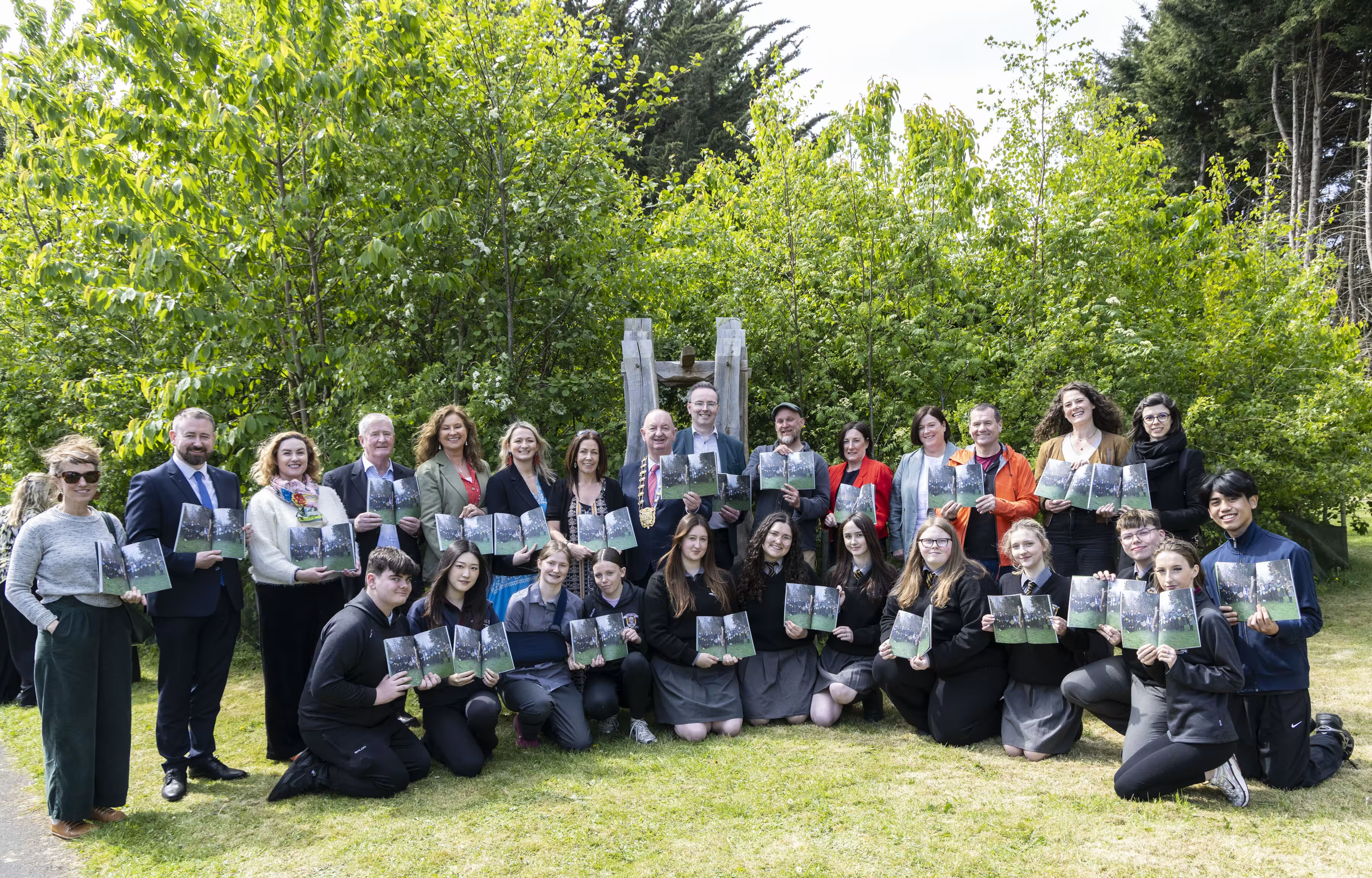
The project brought together a wide range of collaborators, connecting the school community with artists, curators, educators, and council staff across biodiversity, education and operations. Julie Clarke, Youth and Education Officer, Fingal County Council said: “Gareth invited artists working creatively and sustainably with natural materials to share their practices directly with the students. These exchanges deepened students’ understanding of contemporary art practice and the natural world, while highlighting the powerful role of creativity in shaping how we approach both human and environmental health.”
Over four years, the project delivered nine seasons of programming, engaging more than 100 students in hands-on activities spanning ecology, art, and traditional skills. The initiative was financially supported by the Arts Council of Ireland and Fingal Arts Office, with collaboration across Fingal County Council departments, including biodiversity, education, and operations.
Mary Quinn, the then Art Teacher at BCS, enthusiastically welcomed the creative team into school life. She commented, “When the concept of the microforest was first introduced, I could never have anticipated the impact it would have. It has enriched our teaching across subjects, allowing students to work creatively with natural materials while deepening their understanding of ecology. Just as importantly, it has created a space where students can step outside, connect with nature and support their health and wellbeing as part of the school day.”
The trees in the microforest have now reached heights of up to five metres, forming a shaded outdoor space where students can breathe, reflect and reconnect with nature. It encourages human connection and creativity while supporting a thriving ecosystem of insects, birds and native wild plants, none of which were present on the site five years ago. It demonstrates how small interventions can have a significant environmental impact.
Rayne Booth, Director of Superprojects said, “From the outset, this project set out to create meaningful connections between young people, artists and the environment. What has emerged is a space that supports creativity, wellbeing and ecological awareness, while demonstrating how long-term collaboration can have a lasting impact within a school community.”
One Blakestown Community School participant commented, “Being part of the microforest changed how I think about nature. We weren’t just learning about it, we were actually creating something that will keep growing after we leave school. It feels like we’ve made something real that will be here for future students.”
The new publication will be distributed to schools and libraries across Fingal, with a digital version available online.